
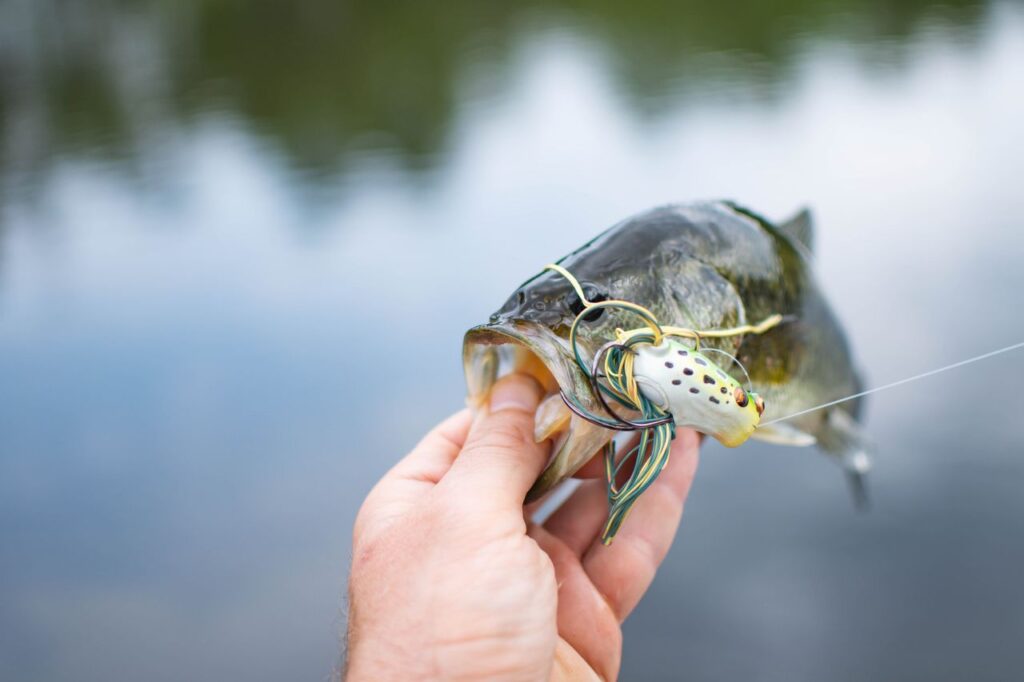
Bass fishing has become America’s favorite freshwater sport because it combines strategy, skill, and the excitement of pursuing one of the most aggressive game fish in North America.
Unlike many freshwater species that feed predictably, bass constantly adjust their behavior based on water temperature, seasonal movements, weather conditions, available forage, fishing pressure, and changing water levels.
Anglers who consistently catch bass rarely depend on luck. They understand how fish relate to structure and cover, recognize feeding patterns, and select the right lure presentation for the conditions.
Bass are also remarkably adaptable. They thrive in natural lakes, reservoirs, rivers, ponds, canals, and even many urban waterways throughout the United States.
Their willingness to strike everything from soft plastic worms and jigs to spinnerbaits, crankbaits, frogs, swimbaits, and live bait makes them accessible to beginners while providing endless opportunities for experienced anglers to refine their techniques.
Success comes from combining the right equipment with an understanding of bass behavior. Rod selection, reel choice, fishing line, knots, lure presentation, seasonal movements, and fish location all work together.
Small adjustments often make the difference between an empty livewell and the best day of the season.
Key Takeaways
- Bass behavior is primarily driven by water temperature, available forage, oxygen levels, seasonal reproduction, and changing weather conditions.
- Finding bass starts with locating food, then identifying nearby cover or structure where fish can conserve energy.
- Match your lure, rig, rod, reel, and presentation to current water conditions rather than relying on one favorite technique.
- Seasonal movements are predictable, allowing anglers to anticipate where bass will position throughout the year.
- Consistent success comes from understanding why bass behave a certain way, not simply memorizing locations or lure choices.
What Is Bass Fishing?
Bass fishing focuses on targeting freshwater bass species using artificial lures or natural bait.
While anglers occasionally catch bass incidentally when fishing for panfish, catfish, or trout, dedicated bass fishing revolves around understanding where bass live, how they feed, and how environmental conditions influence their behavior throughout the year.
Modern bass fishing has evolved into one of the most sophisticated forms of recreational fishing.
Specialized rods, reels, electronics, tournament boats, kayaks, and countless lure designs allow anglers to target bass in nearly every type of freshwater habitat.
Despite the advances in technology, the basic objective remains unchanged: present a lure or bait that convinces a bass it has found an easy meal.
Why Bass Are One of the Most Popular Game Fish
Few freshwater fish match the popularity of bass, and there are good reasons why millions of anglers pursue them every year.
Sport Fishing Appeal
Bass have earned their reputation as one of America’s favorite freshwater game fish because they combine accessibility with an exciting fight.
A two-pound largemouth hooked near heavy cover may dive into weeds, wrap around timber, or leap repeatedly in an attempt to throw the hook.
Smallmouth bass are especially famous for powerful runs and spectacular jumps, making every hookup memorable regardless of the fish’s size.
Aggressive Feeding Behavior
Another reason bass are so popular is their willingness to attack a wide variety of prey. They often strike with remarkable speed and force, making techniques like topwater fishing especially exciting.
Bass readily hit spinnerbaits, crankbaits, chatterbaits, frogs, walking baits, swimbaits, soft plastic worms, and jigs, giving anglers countless ways to catch them throughout the year.
Wide Distribution Across the United States
Healthy bass populations exist across much of the United States, making the species accessible to anglers almost everywhere.
Largemouth, smallmouth, and spotted bass inhabit public reservoirs, natural lakes, rivers, ponds, canals, and many state-managed fisheries.
Many anglers catch their first bass only minutes from home without needing specialized equipment or long-distance travel.
Endless Opportunities to Learn
Bass fishing rewards anglers who continue developing their skills. Every trip offers new lessons about seasonal patterns, water temperature, water clarity, weather changes, forage movement, and fish positioning.
Because bass constantly adapt to changing conditions, no two days on the water are exactly alike. That combination of challenge and continuous learning keeps anglers returning year after year.
Types of Bass
Although dozens of black bass species and subspecies exist, three dominate freshwater bass fishing across North America.
Largemouth Bass
The largemouth bass is the most recognizable and widely distributed species. Its oversized mouth extends beyond the rear edge of the eye, allowing it to consume surprisingly large prey.
Coloration ranges from olive green to dark green with a broken horizontal stripe running along both sides.
Largemouth bass prefer slower-moving water and abundant cover. Weed beds, lily pads, flooded timber, submerged brush, boat docks, laydowns, grass mats, and shoreline vegetation all provide ideal ambush locations.
They often position themselves where prey naturally passes within striking distance rather than chasing bait over long distances.
Largemouth bass also tolerate warmer water better than most bass species and commonly inhabit ponds, reservoirs, canals, oxbows, and shallow natural lakes.
Many trophy bass exceeding ten pounds come from southern states such as Texas, Florida, California, and Georgia, although quality fisheries exist across much of the country.
Smallmouth Bass
Smallmouth bass differ noticeably from their larger-mouthed relatives. Their mouth ends beneath the eye rather than extending beyond it, and their bronze or brown coloration blends naturally with rocky environments.
Instead of thick vegetation, smallmouth prefer clean water with gravel, rock, current, and significant changes in bottom composition.
They’re commonly found in rivers, clear reservoirs, highland lakes, Great Lakes tributaries, and rocky shorelines. Smallmouth bass frequently roam farther than largemouth while feeding, especially when following schools of baitfish.
Once hooked, smallmouth often make long runs and repeated jumps, making them one of freshwater fishing’s hardest-fighting species.
Spotted Bass
Spotted bass share characteristics of both largemouth and smallmouth bass. Their mouth is smaller than a largemouth’s, while rows of dark spots below the lateral line help distinguish them from other species.
Spotted bass commonly inhabit reservoirs and rivers with moderate current. They frequently hold around rocky banks, points, bluff walls, standing timber, and offshore structure.
Compared to largemouth, spotted bass often school more aggressively and suspend around baitfish. Although they generally grow smaller than largemouth, spotted bass compensate with powerful fights and aggressive feeding behavior.
| Feature | Largemouth Bass | Smallmouth Bass | Spotted Bass |
| Appearance | Olive to dark green with a broken horizontal stripe; mouth extends beyond the rear edge of the eye | Bronze to brown with vertical bars; mouth ends beneath the eye | Similar to largemouth but with a smaller mouth and rows of dark spots below the lateral line |
| Preferred Habitat | Slow-moving water with abundant vegetation and cover | Clear water with rock, gravel, and current | Reservoirs and rivers with moderate current and rocky structure |
| Common Locations | Ponds, reservoirs, canals, oxbows, shallow natural lakes | Rivers, clear reservoirs, highland lakes, Great Lakes tributaries, rocky shorelines | Reservoirs, rivers, rocky banks, bluff walls, offshore structure |
| Preferred Cover | Weed beds, lily pads, flooded timber, submerged brush, boat docks, laydowns, grass mats | Rock piles, boulders, gravel, current breaks, ledges | Rocky banks, points, standing timber, bluff walls, offshore humps and ledges |
| Feeding Behavior | Ambush predator that waits for prey to come within striking distance | More active and willing to roam while chasing baitfish | Aggressive feeder that commonly schools around baitfish |
| Water Conditions | Warmer, slower-moving water | Cooler, cleaner water with current | Moderate current and relatively clear water |
| Fighting Ability | Powerful runs with occasional jumps | Long runs and spectacular jumps, considered one of the hardest-fighting freshwater fish | Strong, aggressive fighter despite its smaller average size |
| Average Size | The largest of the three species, trophy fish commonly exceed 10 pounds in prime fisheries | Generally smaller than largemouth, but can reach trophy sizes | Usually smaller than largemouth but larger than many panfish species |
| Best Lures | Texas rigs, frogs, spinnerbaits, jigs, chatterbaits, swimbaits | Tubes, Ned rigs, jerkbaits, football jigs, crankbaits | Swimbaits, finesse worms, jigs, crankbaits, drop shots |
| Ideal For | Fishing heavy vegetation, docks, timber, and shallow cover | Fishing rocky lakes, rivers, and clear-water reservoirs | Fishing offshore structure, rocky reservoirs, and moderate-current rivers |
Other Black Bass Species
Although largemouth, smallmouth, and spotted bass dominate recreational fishing, several additional black bass species occur in specific regions.
| Species | Primary Range | Notable Characteristics |
| Shoal Bass | Georgia, Florida | Prefers rocky rivers with current |
| Guadalupe Bass | Central Texas | Texas state fish, favors clear streams |
| Redeye Bass | Southeastern U.S. | Small river specialist |
| Suwannee Bass | Florida and Georgia | Found in limestone rivers |
Bass Behavior: Understanding How Bass Think
Bass don’t randomly swim through a lake looking for food. Every movement reflects an attempt to conserve energy while maximizing feeding opportunities.
Understanding how bass respond to forage, water temperature, current, light levels, and seasonal changes allows anglers to predict fish location instead of relying on guesswork.
How Bass Feed
Bass are opportunistic predators. Rather than continuously hunting, they feed during windows of increased activity that often coincide with changing light conditions, weather fronts, baitfish movement, or favorable water temperatures.
Most bass spend much of the day positioned beside cover or structure. Common ambush locations include weed edges, dock posts, fallen trees, grass lines, rock transitions, creek channel bends, and bridge pilings.
From these positions, bass wait for prey to move close enough for a rapid burst of speed.
Instead of chasing bait over long distances, they prefer meals requiring minimal energy expenditure.
Early morning, late evening, overcast conditions, incoming current, and approaching weather systems frequently trigger increased feeding activity.
What Bass Eat
Bass consume almost anything they can overpower. The dominant forage varies by region, season, and body of water, making local knowledge extremely valuable.
Common Baitfish
Shad are among the most important forage species in reservoirs. During spring and fall, schools of baitfish often dictate where bass concentrate.
Minnows, shiners, perch, juvenile crappie, and other baitfish provide high-protein meals throughout the year.
As surface temperatures decline, shad and other baitfish migrate into creek arms where plankton becomes concentrated.
Bass follow because remaining close to forage allows them to maximize feeding before winter reduces metabolic activity.
Panfish
Bluegill become especially important after the bass spawn. Adult bass frequently patrol spawning bluegill colonies because they provide a dependable food source.
Crawfish
Crawfish remain a year-round staple in rocky lakes and rivers. Their availability explains why football jigs, finesse jigs, Ned rigs, and craw-colored crankbaits consistently produce fish.
Amphibians
Frogs become major forage during warm months when vegetation thickens. Hollow-body frogs excel over lily pads, hydrilla, duckweed, and matted grass where conventional lures cannot travel.
Small Prey
Bass also consume worms, insects, salamanders, leeches, mice, snakes, and nearly any struggling creature that appears vulnerable.
How Water Temperature Changes Bass Activity
Water temperature influences nearly every aspect of bass behavior.
Cold winter water slows a bass’s metabolism considerably. Fish become less willing to chase fast-moving lures and often remain near deep structure where temperatures stay relatively stable.
Slow presentations with jigs, suspending jerkbaits, finesse worms, and blade baits usually outperform aggressive retrieves.
As water begins warming in late winter and early spring, bass become increasingly active. Rising temperatures trigger migration toward spawning areas, creating one of the year’s best opportunities for catching larger fish.
During the spawn, bass move into protected coves, pockets, and shallow flats with firm bottoms. While actively spawning fish may ignore feeding opportunities, they often strike out of territorial instinct when a lure enters the nest.
Following the spawn, bass recover by feeding aggressively before transitioning into summer patterns. Summer heat often pushes bass toward deeper water, offshore structure, heavy vegetation, boat docks, or areas with current and higher oxygen levels.
Early mornings, evenings, and nighttime frequently provide the best action.
Cooling water during fall reverses many summer patterns. Baitfish migrate into creeks and shallow coves, drawing bass with them. Fast-moving search baits become especially effective during this period.
| Water Temperature | Seasonal Pattern | Bass Behavior | Recommended Approach |
| Below 45°F | Winter Stasis | Metabolism drops by roughly 70%. Bass hold on deep, vertical structure and creek channels while conserving energy. | Fish extremely slowly with finesse presentations such as jigs, blade baits, Ned rigs, or suspending jerkbaits. |
| 48°F–55°F | Pre-Spawn Transition | Bass stage along creek channels, secondary points, and migration routes as they move toward shallow spawning flats. | Target staging areas with red craw-colored crankbaits, jigs, spinnerbaits, and suspending jerkbaits. |
| 60°F–68°F | Spawn | Bass move into shallow water, typically less than 5 feet deep, to build and guard nests on hard clay, sand, or gravel bottoms. | Fish slowly around spawning areas with soft plastics, creature baits, tubes, and compact jigs. |
| 72°F–85°F | Summer Peak | The thermocline develops, causing bass to either hold beneath thick vegetation or school on deep offshore structure such as ledges and humps. | Target shallow grass mats with frogs or punch rigs, or fish offshore with deep-diving crankbaits, Carolina rigs, football jigs, and electronics. |
Water Clarity
Water clarity affects how bass locate prey and how anglers should present lures.
In clear water, bass rely heavily on sight. Natural lure colors, lighter fishing line, realistic bait profiles, and longer casts generally produce better results because fish have more time to inspect potential prey.
Stained water reduces visibility, allowing anglers to use brighter colors such as chartreuse, white, and black-and-blue. Spinnerbaits, chatterbaits, and crankbaits that create vibration become easier for bass to detect.
Muddy water forces bass to depend primarily on vibration and sound. Large-profile lures with Colorado blades, rattles, or bulky trailers often outperform subtle finesse presentations.
Current
Current concentrates food and positions bass predictably.
Bass almost always face into current because drifting forage arrives headfirst. Holding behind rocks, bridge pilings, grass lines, or current seams lets bass conserve energy while allowing food to come to them.
This energy-efficient feeding strategy explains why current breaks consistently outperform featureless water.
Creek mouths become especially productive because they combine current, baitfish movement, oxygen, and changing water temperatures.
Even on lakes without flowing rivers, wind creates current. Sustained wind pushes plankton toward one shoreline, attracting baitfish and eventually bass.
Rather than avoiding windy conditions, experienced anglers frequently target windblown banks because they often hold actively feeding fish.
The Biology Behind Bass Behavior
Understanding bass biology makes their seasonal movements and feeding behavior much easier to predict.
Sensory Systems
Bass locate prey using multiple senses rather than eyesight alone. Their lateral line detects vibration and water displacement, allowing them to locate prey in stained or muddy water.
Vision becomes increasingly important in clear water, while smell and taste help bass evaluate prey after striking.
Metabolism
Because bass are cold-blooded, water temperature directly controls their metabolism.
Warmer water generally increases feeding activity until oxygen levels become limiting, while colder water slows digestion and reduces the need to feed frequently.
Growth and Size
Young bass primarily consume insects and small invertebrates before gradually transitioning to crawfish, bluegill, shad, and other fish as they grow.
Larger bass often target fewer but larger prey because larger meals provide more energy relative to the effort required to capture them.
Reproduction
Bass spawn once water temperatures stabilize in spring. Males construct nests, protect eggs, and guard newly hatched fry, which explains why spawning bass frequently strike lures out of defense rather than hunger.
Ecology
Bass occupy the role of apex predators in many freshwater systems. Their movements closely follow forage populations, oxygen availability, seasonal habitat changes, and competition from other predators.
Best Places to Find Bass
Finding bass consistently starts with understanding the relationship between cover, structure, food, and seasonal movement.
Bass rarely roam aimlessly across open water. Instead, they position themselves where they can feed efficiently while remaining protected from predators and changing environmental conditions.
The best anglers don’t simply cast toward visible targets. They identify the highest-percentage areas based on water temperature, depth, current, forage, and the season.
Natural Cover
Natural cover provides bass with concealment, shade, oxygen, and easy access to prey. These areas often produce fish throughout the year, although the exact depth and location change with seasonal conditions.
Weed Beds and Grass Lines
Weed beds are among the most productive forms of bass habitat. Healthy vegetation attracts bluegill, minnows, insects, frogs, and other forage species, creating a complete food chain.
Bass commonly patrol the outside weed edge during stable conditions and move farther into the vegetation during bright sunlight or periods of heavy fishing pressure.
Grass lines deserve special attention because they create a distinct transition between open water and vegetation. Bass frequently position along these edges to ambush passing baitfish.
Healthy vegetation does more than provide hiding cover. Grass produces oxygen during daylight, attracts insects and baitfish, shades the water, and creates distinct feeding lanes along its edges.
These factors combine to make vegetation one of the highest-percentage habitats for largemouth bass throughout much of the year.
Spinnerbaits, chatterbaits, swim jigs, paddle-tail swimbaits, and Texas-rigged worms all excel along grass edges.
Lily Pads
Lily pads provide overhead cover that blocks sunlight while attracting frogs, insects, and baitfish.
Hollow-body frogs can be worked across the pad field, while weightless soft plastics or Texas-rigged worms often catch bass hiding beneath the canopy.
Standing Timber
Standing timber and submerged trees remain productive throughout the year. Bass position around trunks, branches, and root systems because they offer shade and vertical structure at multiple depths.
Jigs, Texas rigs, and deep-diving crankbaits effectively probe these areas.
Laydowns
Laydowns, or fallen trees extending into the water, combine hard cover with changing depths.
Bass commonly hold near the trunk during cooler conditions before moving toward the outer branches as water warms.
Pitching a jig or soft plastic into openings between the branches often produces multiple bites from a single tree.
Hard Structure
Unlike cover, structure refers to the physical shape and contours of the lake or river bottom. While cover can disappear as vegetation dies back or water levels fluctuate, structure remains relatively permanent.
Rocky Banks and Riprap
Rocky banks and boulder fields attract crawfish, making them ideal feeding areas for both largemouth and smallmouth bass. Football jigs, crankbaits, Ned rigs, and finesse worms imitate the natural forage found around rock.
Riprap, the large rock placed along bridges, dams, and shorelines to prevent erosion, often holds bass year-round. The uneven surfaces provide hiding places for crawfish while absorbing heat during cooler months.
Points
Points extend from shore into deeper water and serve as underwater highways for migrating bass. Fish frequently stop at points while moving between deep summer structure and shallow spawning areas.
Wind blowing across a point often increases feeding activity by concentrating baitfish.
Humps
Humps are underwater high spots surrounded by deeper water. Offshore bass often school around these isolated structures, especially during summer and winter.
Modern sonar and GPS mapping make humps significantly easier to locate than in previous decades.
Creek Channels
Creek channels function as travel corridors throughout the year. During seasonal transitions, bass follow channel edges while moving between spawning flats and deeper water.
Sharp channel bends, intersections, and nearby points frequently become high-percentage fishing locations.
Man-Made Cover
Artificial structures often hold bass because they provide shade, protection, and predictable ambush points.
Boat Docks
Boat docks remain productive in nearly every season. Floating docks create extensive shade during summer, while pilings provide vertical structure regardless of changing water levels.
Skipping weightless worms, wacky rigs, and compact jigs beneath docks reaches fish that many anglers overlook.
Bridges
Bridges combine current, shade, and hard structure. Bass often position themselves beside bridge pilings where moving water carries baitfish directly to them.
Depending on the depth, crankbaits, swimbaits, spinnerbaits, and soft plastics all perform well around bridges.
Pilings
Pilings around marinas and waterfront developments attract baitfish seeking protection. Bass typically hold on the shaded side during bright conditions before moving outward during low-light feeding periods.
Marinas
Marinas often maintain slightly deeper water than surrounding shorelines, allowing bass to remain nearby throughout changing seasons.
Boat slips, seawalls, floating platforms, and dock corners create numerous ambush opportunities.
Bank Fishing Locations
Bank fishing remains one of the easiest ways to begin bass fishing, and many productive locations require little specialized equipment.
Shorelines
Shorelines with gradual depth changes, scattered vegetation, and isolated wood consistently attract bass.
Rather than casting only parallel to shore, vary your casting angles to cover multiple depths.
Ponds
Neighborhood ponds often support healthy bass populations because they receive regular forage stocking and limited commercial fishing pressure.
Bass in smaller ponds commonly relate to a few key pieces of cover, making pattern recognition easier.
Small Lakes
Small lakes offer more structure than ponds while remaining manageable for anglers on foot.
Focus on visible grass, docks, inflowing creeks, fallen trees, and shoreline points before exploring deeper water.
Canals
Canals provide surprisingly consistent bass fishing, particularly in warmer climates. Residential canals often feature seawalls, culverts, boat docks, and drainage pipes that concentrate fish throughout the year.
Boat Fishing Locations
A boat opens water that shore anglers can’t reach, allowing access to offshore bass that receive less fishing pressure.
Deep Points
Deep points become especially productive during summer when bass move away from shallow spawning areas.
Drop-Offs
Drop-offs create sudden changes in depth where bass can feed in shallow water before retreating quickly into deeper, more stable conditions.
Standing Timber
Standing timber provides vertical habitat throughout the water column. Bass suspend at varying depths depending on light levels, forage, and water temperature.
Offshore Structure
Offshore ledges, humps, submerged roadbeds, shell beds, and brush piles frequently produce some of the largest bass in reservoirs, particularly when located with electronics.
Kayak Bass Fishing
Kayaks have transformed bass fishing by giving anglers affordable access to productive water without requiring a trailer or large tow vehicle.
Their quiet approach allows anglers to fish shallow cover with minimal disturbance. Bass holding beneath docks, over grass flats, or beside shoreline vegetation often remain relaxed as a kayak approaches.
Kayaks also reach areas inaccessible to larger boats, including narrow creeks, shallow backwaters, flooded timber, and small ponds connected by limited launch points.
Positioning becomes especially important because wind and current can quickly move lightweight watercraft. Many kayak anglers use anchor systems, stake-out poles, or pedal drives to maintain precise casting angles around cover.
Regional Bass Fishing Strategies
| Region | Typical Pattern |
| Southeast | Vegetation, shallow reservoirs, frogs, flipping, punch rigs |
| Midwest | Natural lakes, grass edges, docks, bluegill forage |
| Northeast | Clear lakes, finesse fishing, smallmouth structure |
| Great Lakes | Gobies, tubes, drop shots, deep rock |
| Western reservoirs | Offshore structure, electronics, swimbaits |
Bass Fishing Gear
Successful bass fishing depends as much on equipment selection as lure choice. Rod power, reel type, fishing line, and terminal tackle all influence casting accuracy, hook-setting power, lure action, and fish-fighting performance.
Rather than searching for one outfit that performs every task, most experienced anglers gradually build combinations suited to specific techniques.
Choosing the Right Rod
The fishing rod determines how effectively an angler casts, works a lure, detects bites, and controls hooked fish. Selecting the appropriate length, power, and action greatly improves overall performance.
Casting Rods
Casting rods pair with baitcasting reels and excel when fishing heavier lures, larger hooks, and dense cover.
Heavy-power rods provide maximum backbone for pulling bass from thick grass, hydrilla, lily pads, flooded timber, and heavy vegetation. They’re commonly used for frogs, punch rigs, flipping jigs, and large swimbaits.
Medium-heavy rods have become the most versatile option for bass fishing. They comfortably handle Texas rigs, spinnerbaits, chatterbaits, jigs, buzzbaits, swim jigs, and many crankbaits, making them an excellent all-around choice.
Medium-power casting rods perform well with lighter reaction baits, jerkbaits, smaller crankbaits, and finesse presentations that require more casting accuracy than raw power.
Spinning Rods
Spinning tackle shines whenever finesse presentations become necessary.
Light and medium-light spinning rods cast lightweight lures farther than baitcasting equipment while providing exceptional sensitivity for subtle bites.
Drop shot rigs, Ned rigs, shaky heads, small swimbaits, weightless worms, and finesse tubes all perform exceptionally well on spinning equipment.
Many experienced bass anglers carry both spinning and casting outfits because each serves different techniques more efficiently.
Rod Length, Power, and Action
Rod length affects casting distance, leverage, and line control.
| Rod Length | Best For | Key Advantages |
| 6’6″ and shorter | Skipping docks, fishing tight cover, precision casting | Excellent casting accuracy and control in confined spaces |
| 7’0″–7’3″ | General bass fishing | Provides a balance of casting distance, hook-setting leverage, and fish control |
| 7’4″ and longer | Flipping, punching, Carolina rigs, offshore presentations | Increases casting distance, picks up more line on hooksets, and offers greater leverage when fighting fish |
Power describes how much force is required to bend the rod, while action describes where the rod begins flexing.
Fast-action rods bend primarily near the tip, providing excellent sensitivity and powerful hooksets.
Moderate-action rods flex deeper into the blank, making them better suited for treble-hook lures like crankbaits because they reduce the likelihood of pulling hooks free.
Choosing the Best Reel
A quality reel complements the rod and influences casting control, retrieve speed, and fish-fighting ability.
Spinning Reels
Spinning reels remain the easiest option for beginners because they minimize backlash while casting lightweight lures.
They excel with finesse presentations, lighter fishing line, and techniques requiring long casts with small soft plastics.
Baitcasting Reels
Baitcasting reels provide greater accuracy, stronger drag systems, and better control when using heavier lures or fishing dense cover.
Although they require practice to avoid backlash, they become indispensable for pitching, flipping, frog fishing, heavy jigs, and large reaction baits.
Gear Ratios
Gear ratio indicates how many times the spool rotates with one handle turn.
| Gear Ratio | Best For | Key Advantages |
| 5:1 (Low Speed) | Deep-diving crankbaits | Slower retrieve makes it easier to fish high-resistance lures while maintaining the desired depth |
| 6:1–7:1 (Mid Speed) | Spinnerbaits, Texas rigs, jigs, chatterbaits, and general bass fishing | Versatile retrieve speed suitable for most bass fishing techniques |
| 8:1 and higher (High Speed) | Frog fishing, flipping, pitching, and other slack-line techniques | Quickly recovers line, allowing faster hooksets and improved lure control |
Fishing Line Guide
Fishing line affects lure presentation, sensitivity, visibility, and hook-setting performance. Choosing the correct line often matters as much as selecting the right lure.
| Line Type | Best Uses | Key Advantages |
| Monofilament | Topwater lures, beginner setups | Floats, forgiving stretch, easy handling |
| Fluorocarbon | Texas rigs, jigs, worms, crankbaits | Low visibility, excellent sensitivity, and abrasion resistance |
| Braided Line | Heavy cover, frogs, punching | High strength, minimal stretch, and exceptional cutting power through vegetation |
Monofilament floats naturally, making it an excellent choice for poppers, buzzbaits, walking baits, and live bait presentations. Its stretch also reduces pulled hooks when fish surge near the boat.
Fluorocarbon sinks slowly and becomes nearly invisible underwater. Its increased sensitivity helps anglers detect subtle bites while fishing jigs, worms, and other bottom-contact techniques.
Braided line offers unmatched strength relative to diameter. It slices through vegetation effectively and provides instant hook-setting power at long distances.
Because braid remains highly visible in clear water, many anglers attach a fluorocarbon leader when finesse fishing.
Key considerations when selecting fishing line include visibility, stretch, abrasion resistance, and the type of cover being fished.
Rod and Reel Matching Guide
| Technique | Rod | Reel | Line |
| Texas Rig | 7′ MH Fast | 7:1 Baitcaster | Fluorocarbon |
| Frog | Heavy Fast | 8:1 Baitcaster | Braid |
| Drop Shot | ML Spinning | 2500 Spinning | Braid to Fluoro |
| Crankbait | Moderate Casting | 5:1 | Fluorocarbon |
| Spinnerbait | MH Fast | 6:1 | Fluorocarbon |
Terminal Tackle
Even the best rod and reel can’t compensate for poorly selected terminal tackle. Hooks should match both the lure and the cover.
| Terminal Tackle | Common Uses | Why It’s Used |
| Wide-Gap Offset Hooks | Texas-rigged soft plastics | Accommodate thicker soft plastics while providing solid hook penetration and a weedless presentation. |
| Straight-Shank Flipping Hooks | Flipping and punching heavy vegetation | Offer greater hook-holding power and strength when pulling bass from dense cover. |
| Bullet Weights | Texas rigs, punch rigs | Streamlined shape slips easily through grass, brush, and wood with minimal snagging. |
| Egg Sinkers | Carolina rigs | Slide freely along the main line, allowing the bait to move naturally behind the weight. |
| Jig Heads | Ned rigs, swimbaits, finesse worms, shaky heads, traditional jigs | Available in various styles to match different lure presentations, depths, and bottom conditions. |
| Swivels | Carolina rigs, live bait presentations | Minimize line twist and improve overall rig performance. |
| Bobbers | Live bait fishing, ponds, and small lakes | Suspend bait at a specific depth to make bite detection easier, especially for beginners. |
High-quality terminal tackle may appear insignificant, but reliable hooks, weights, snaps, and swivels frequently determine whether a strike becomes a landed fish.
Best Bass Fishing Lures
Few aspects of bass fishing receive as much attention as lure selection. Every season brings new lure designs and colors, yet experienced anglers consistently rely on a relatively small group of proven presentations.
No single lure catches bass under every condition. Water temperature, clarity, forage, cover, depth, and fish activity determine which presentation works best on a given day.
Soft Plastic Worms
Soft plastic worms remain one of the most versatile bass lures ever created. They imitate a wide variety of prey and can be rigged in multiple ways to fish everything from shallow vegetation to deep offshore structure.
Texas Rig
The Texas rig remains one of the most versatile and widely used presentations in bass fishing.
An offset worm hook paired with a sliding bullet weight creates a nearly weedless setup that moves efficiently through grass, brush, wood, flooded vegetation, and other heavy cover where bass commonly hide.
This rig consistently produces fish around weed beds, laydowns, boat docks, brush piles, standing timber, lily pads, and shoreline grass.
It can be fished at a variety of depths, making it effective throughout the year as bass move between shallow and deeper water.
A slow, methodical retrieve usually delivers the best results. Let the bait maintain contact with the bottom, occasionally pausing to allow the soft plastic to settle naturally.
Many bass strike as the lure falls after clearing an obstacle or during one of these brief pauses.
Wacky Rig
A wacky rig hooks the worm through its middle, allowing both ends to flutter independently during the fall. This subtle action often triggers inactive bass that ignore faster-moving lures.
Wacky rigs shine around docks, seawalls, sparse grass, and calm, clear water. Because the bait sinks slowly, anglers should allow plenty of time before retrieving.
Weightless Rig
Fishing a soft plastic without added weight creates one of the most natural presentations available.
Weightless stick worms, flukes, and finesse worms perform exceptionally well around shallow cover, spawning flats, grass edges, and suspended bass.
The slow fall frequently produces bites before the lure reaches the bottom.
Carolina Rig
The Carolina rig combines an egg sinker, swivel, leader, and floating soft plastic to cover large offshore areas efficiently.
Unlike a Texas rig, the weight stays on the bottom while the bait trails naturally behind, making it ideal for deep points, humps, creek channels, and offshore flats.
Jigs
Jigs consistently produce some of the biggest bass in every region of the country because they imitate crawfish, bluegill, and bottom-dwelling forage.
Although beginners sometimes hesitate to fish jigs because they snag easily, they become one of the highest-confidence lures once anglers learn to distinguish bites from bottom contact.
Football Jig
The football jig features a wide, football-shaped head that resists rolling between rocks, making it the preferred choice for fishing offshore structure.
It performs especially well on rock piles, gravel points, humps, deep ledges, and creek channels where crawfish are a primary food source.
Pairing the jig with a craw trailer creates a realistic bottom presentation that consistently produces bass throughout much of the year.
Work the lure slowly across the bottom, allowing it to crawl over rocks and pause naturally around changes in depth or structure.
Flipping Jig
Flipping jigs feature heavy-duty hooks and compact heads designed for pitching accurately into dense cover.
They excel around laydowns, brush piles, boat docks, standing timber, and thick shoreline vegetation where bass often position to ambush prey.
Their compact profile slips through cover with minimal snagging, while the slow, controlled fall frequently triggers strikes from fish holding beneath the cover.
Swim Jig
Rather than dragging the lure across the bottom, swim jigs remain in motion. They imitate bluegill and baitfish while moving naturally through grass, scattered wood, and shallow cover.
Adding a paddle-tail trailer increases vibration and realism.
Spinnerbaits
Spinnerbaits continue catching bass despite decades of new lure introductions. Their combination of flash, vibration, and weedless design allows anglers to cover water quickly while fishing around vegetation, wood, docks, and shoreline cover.
Willow Blades
Long, narrow willow blades create significant flash while producing relatively little vibration, making them an excellent choice when bass rely heavily on sight.
They perform best in clear water, bright sunlight, and around schooling baitfish, where their slim profile closely resembles fleeing shad.
Willow-blade spinnerbaits are also well suited to faster retrieves, allowing anglers to cover water efficiently while imitating baitfish moving through open water or along grass edges.
Colorado Blades
Rounded Colorado blades produce strong vibration that bass detect through their lateral line, making them especially effective when visibility is limited.
They excel in muddy or stained water, during cloudy conditions, and even at night when fish rely more on vibration than sight to locate prey.
Colorado-blade spinnerbaits also perform well on windy days because wind reduces underwater visibility while concentrating baitfish along windblown banks, creating prime feeding opportunities.
Chatterbaits
Bladed jigs, commonly known as chatterbaits, combine the flash of a spinnerbait with the profile of a jig.
Their vibrating metal blade creates an erratic hunting action that frequently triggers reaction strikes from aggressive bass.
Chatterbaits perform particularly well around grass lines, shallow vegetation, shoreline cover, docks, and flooded bushes where they can be retrieved through sparse cover without losing their action.
Pairing one with a paddle-tail trailer adds both vibration and a larger baitfish profile, making the lure even more convincing. Chatterbaits are especially productive during spring and fall when bass actively chase schools of baitfish.
Crankbaits
Crankbaits allow anglers to locate active fish by covering water efficiently. Different bill designs determine diving depth and the type of cover each lure navigates best.
Squarebill Crankbaits
Squarebill crankbaits rarely dive deeper than about six feet, making them ideal for targeting shallow bass.
Their squared lip causes the lure to deflect unpredictably after contacting wood, rocks, stumps, or dock pilings, and these sudden changes in direction often trigger reaction strikes from nearby fish.
Squarebills are particularly effective around laydowns, riprap, shallow rock, stumps, and boat docks where frequent contact with cover helps create a more natural, erratic presentation.
Medium-Diving Crankbaits
Medium divers reach depths between approximately six and twelve feet.
They effectively cover secondary points, creek channels, offshore grass edges, and transition banks during spring and fall.
Deep-Diving Crankbaits
Deep divers target bass holding beyond twelve feet during summer and winter.
Long casts help these lures achieve maximum depth before contacting offshore structure.
Jerkbaits
Suspending jerkbaits remain one of the most productive lures for cold-water bass fishing.
Instead of using a steady retrieve, work the lure with short rod twitches followed by pauses that allow it to suspend in place.
During colder conditions, pauses lasting anywhere from five to twenty seconds often trigger more strikes than continuous movement because they imitate an injured baitfish.
As water temperatures rise and bass become more active, shortening the pauses and using a more aggressive cadence typically produces better results.
Jerkbaits are especially effective around bluff walls, points, suspended baitfish, and clear reservoirs where bass often feed in open water.
Swimbaits
Swimbaits imitate larger forage and regularly produce trophy bass.
Paddle-Tail Swimbaits
Soft paddle tails generate realistic swimming action even at slow speeds.
Fish them on jig heads, underspins, swim jigs, Alabama rigs, or weighted hooks around grass, open water, and offshore schools.
Glide Baits
Large hard glide baits target mature bass capable of eating oversized prey. Their wide side-to-side movement imitates injured baitfish and often attracts fish exceeding five pounds.
Although bites may be fewer, average fish size typically increases.
Topwater Lures
Few experiences compare to watching a bass explode through the surface to strike a topwater lure.
Surface fishing generally peaks during low-light periods, calm mornings, evenings, overcast conditions, and whenever bass actively feed upward.
Frogs
Hollow-body frogs remain one of the best topwater lures for fishing dense vegetation.
Their weedless design allows anglers to retrieve them directly across lily pads, hydrilla, duckweed, grass mats, and other floating vegetation where conventional lures would quickly snag.
Because bass often strike explosively through thick cover, it’s important to wait briefly before setting the hook to give the fish enough time to fully engulf the lure.
Walking Baits
Walking baits move side to side in a rhythmic “walk-the-dog” action. They excel whenever bass feed aggressively on open-water baitfish.
Long points, shallow flats, and schooling fish provide excellent opportunities.
Poppers
Poppers create short splashes that imitate struggling baitfish or insects.
They perform particularly well around docks, seawalls, calm shorelines, and isolated cover.
Buzzbaits
Buzzbaits generate continuous surface commotion while retrieved steadily.
Unlike many topwater lures, they cover water quickly and often trigger reaction strikes around shoreline vegetation and shallow cover.
Live Bait
Although artificial lures dominate modern bass fishing, live bait remains highly effective.
| Live Bait | Best Conditions | Why It Works |
| Earthworms | Ponds, canals, and small lakes | Easy to present and naturally appealing to bass of all sizes. |
| Minnows | Open water, around structure, beneath floats, or on Carolina rigs | Closely imitate local baitfish, making them effective when bass are feeding on forage species. |
| Crawfish | Rocky lakes and rivers | Match a primary food source for bass in rocky habitats and naturally appeal to bottom-feeding fish. |
| Leeches | Cooler water and lightly pressured fisheries | Their slow, natural movement makes them effective when presented along the bottom to entice less active bass. |
Essential Bass Fishing Rigs
Rig selection determines how naturally a lure moves through different types of cover. Understanding several core rigs allows anglers to adapt quickly as conditions change.
Texas Rig
The Texas rig has earned its reputation as one of the most versatile presentations in bass fishing because it can be fished effectively through a wide range of cover.
A standard Texas rig consists of a bullet weight, an offset worm hook, and a soft plastic bait. Some anglers choose to peg the bullet weight to the line, preventing it from sliding and helping the rig penetrate thick vegetation more efficiently.
To rig it, thread the hook through the nose of the soft plastic, rotate the bait into position, and embed the hook point back into the body to create a weedless presentation.
This design allows the lure to move cleanly through grass, brush, wood, boat docks, laydowns, lily pads, and flooded bushes while minimizing snags.
Its ability to fish heavy cover without constantly hanging up makes the Texas rig a reliable choice throughout the year.
Carolina Rig
The Carolina rig excels whenever bass move offshore. A heavy egg sinker remains on the main line above a swivel, while a leader allows the soft plastic to move naturally behind the weight.
Dragging the rig slowly across points, humps, ledges, and creek channels covers large areas while maintaining bottom contact.
Drop Shot
The drop shot presents a soft plastic bait above the weight instead of directly on the bottom, creating a subtle presentation that keeps the lure suspended in the strike zone while the sinker maintains bottom contact.
This finesse technique consistently catches pressured bass in deep water, clear reservoirs, around bluff walls, and over offshore schools.
A light spinning outfit paired with fluorocarbon line provides the sensitivity needed to detect subtle bites and maintain precise control of the presentation.
Ned Rig
Few finesse presentations rival the Ned rig when fishing becomes difficult. A short stick bait threaded onto a mushroom jig head creates a compact profile that resembles crawfish, gobies, insects, and other bottom forage.
The bait stands upright when resting on the bottom, producing an enticing appearance even without significant rod movement.
Ned rigs shine on highly pressured lakes where bass have become conditioned to larger presentations.
Wacky Rig
The wacky rig is one of the simplest and most effective finesse presentations, making it a favorite among beginners and experienced anglers alike.
Instead of rigging the worm from the nose, the hook is placed through the center of the bait, allowing both ends to flutter naturally as it sinks.
This slow, subtle action often entices bass that ignore faster-moving lures.
The wacky rig is especially productive around boat docks, where skipping the bait beneath the structure can reach fish that receive little fishing pressure. Because the lure falls so naturally, many strikes occur before it reaches the bottom.
Punch Rig
The punch rig is designed to reach bass hiding beneath vegetation that is too thick for most other presentations.
A heavy tungsten weight paired with a streamlined soft plastic allows the bait to break through dense grass mats, hydrilla, and other heavy cover where largemouth bass seek shade and cooler water during hot weather.
Fishing a punch rig requires a heavy-power rod, braided line, and strong hooksets to pull fish out before they can wrap the line around vegetation or bury themselves deeper into the cover.
Best Rig Selection Matrix
| Situation | Recommended Rig | Why |
| Heavy vegetation | Texas Rig | Weedless presentation |
| Deep offshore | Carolina Rig | Covers water efficiently |
| Pressured fish | Ned Rig | Small, subtle profile |
| Vertical fishing | Drop Shot | Keeps bait above bottom |
| Boat docks | Wacky Rig | Slow natural fall |
| Thick grass mats | Punch Rig | Penetrates dense cover |
Bass Fishing Techniques
The way a lure is rigged has a major impact on how it moves through the water, navigates cover, and appeals to bass.
While the same soft plastic can produce very different results depending on the rig, each presentation is designed to solve a specific challenge, whether that’s fishing thick vegetation, targeting offshore structure, or enticing pressured fish with a finesse approach.
Casting
Accurate casting consistently outperforms maximum distance.
Rather than casting randomly across open water, target specific pieces of cover such as dock corners, grass points, isolated stumps, or rock transitions.
Fan casting helps cover water systematically by working different angles before moving to the next location. Keeping the lure in productive water longer increases the chances of encountering active bass.
Pitching
Pitching provides a quiet, controlled presentation at short to medium distances, making it ideal for targeting bass holding tight to cover.
Instead of making a full overhead cast, anglers swing the lure underhand toward precise targets, allowing it to enter the water with minimal disturbance.
This technique is especially effective around boat docks, laydowns, shoreline bushes, boat slips, and standing timber, where a subtle entry helps avoid spooking nearby fish.
Flipping
Flipping is a close-range technique that allows anglers to present a lure repeatedly without making traditional casts or frequently engaging the reel.
Using the rod and a fixed length of line, the lure can be placed accurately into multiple targets in quick succession.
Flipping excels in heavy vegetation, brush piles, thick timber, and flooded cover where bass often position deep within the structure.
Its efficiency makes it a favorite among tournament anglers, who may make hundreds of presentations in a single day while working productive shoreline habitat.
Working Different Lures
Every lure category performs best with a specific retrieve.
| Lure Type | Recommended Retrieve | Best Practice |
| Soft Plastic Worms | Slow drag along the bottom with occasional pauses and subtle rod lifts | Keep the bait in contact with the bottom and let it settle naturally to trigger strikes. |
| Spinnerbaits | Steady retrieve with occasional speed changes | Keep the blades spinning consistently and occasionally bump cover to trigger reaction bites. |
| Crankbaits | Moderate, steady retrieve that makes contact with cover | Intentionally deflect the lure off rocks, wood, and dock pilings to create erratic movements that provoke strikes. |
| Chatterbaits | Moderate retrieve with pauses, rod twitches, or bursts of speed | Vary the retrieve to imitate fleeing baitfish, especially around grass and shallow cover. |
| Frogs | Slow, steady retrieve across surface vegetation | Keep the lure on top of the cover and wait briefly after a strike before setting the hook. |
| Jigs | Slow crawl, hop, or lift-and-drop presentation | Work the jig methodically around rocks, wood, and vegetation, paying close attention to subtle bites that often feel like added weight or slight pressure. |
Seasonal Bass Fishing
Bass rarely stay in the same locations throughout the year. Seasonal changes in water temperature, daylight, forage movement, and spawning behavior influence where fish position themselves and how aggressively they feed.
Spring Bass Fishing
Spring consistently ranks among the best times of year to catch bass. Rising water temperatures trigger migration from winter holding areas toward shallow spawning habitat, and bass feed heavily to prepare for reproduction.
Pre-Spawn
As water temperatures climb into the upper 40s and 50s, bass gradually leave deep winter structure and move toward secondary points, creek channels, staging areas, and transition banks on their way to spawning areas.
During this period, they feed aggressively to build the energy reserves needed for reproduction.
Spinnerbaits, chatterbaits, suspending jerkbaits, lipless crankbaits, jigs, and Texas-rigged worms are all productive choices during the pre-spawn.
Concentrate your efforts on rocky points, channel swings, submerged grass, and other staging areas located near shallow spawning flats, where bass often pause before moving into the shallows.
Spawn
Most largemouth bass spawn when water temperatures reach approximately 60°F to 70°F, although timing varies by latitude and weather conditions.
Bass build nests on firm bottoms protected from strong current and wave action. Gravel, sand, and hard clay are common spawning substrates.
Male bass aggressively guard their nests, while females remain nearby until spawning concludes.
Soft plastics, tubes, creature baits, and compact jigs often trigger territorial strikes when presented carefully near spawning beds.
Always follow local regulations regarding bed fishing, and handle spawning fish quickly before returning them to the water.
Post-Spawn
Following the spawn, many bass recover by feeding aggressively before transitioning into summer patterns.
Bluegill colonies become important feeding locations because bass patrol these areas in search of easy meals.
Topwater lures, swim jigs, spinnerbaits, chatterbaits, and soft plastics all produce well during this transition.
Summer Bass Fishing
Summer fishing changes as rising water temperatures reduce dissolved oxygen in shallow water.
Many bass spend the middle of the day relating to deeper structure before moving shallow again during low-light periods. Early mornings often provide excellent topwater action around grass lines, boat docks, and shallow points.
As the sun climbs higher, bass commonly relocate to offshore humps, creek channels, deep points, standing timber, brush piles, and ledges where water temperatures are more stable.
Deep-diving crankbaits, Carolina rigs, football jigs, drop shots, and paddle-tail swimbaits become increasingly productive as fish establish offshore summer patterns.
Heavy vegetation also remains an important target because healthy grass provides both shade and oxygen. Frog fishing and punching thick grass mats frequently produce quality largemouth even during hot afternoons.
Night fishing can be equally productive during the warmest months, as cooler temperatures encourage bass to feed more actively after sunset. Spinnerbaits, buzzbaits, worms, and large jigs are all reliable choices after dark.
Modern electronics become especially valuable during summer because offshore bass often school on isolated structure that’s difficult to locate from the surface.
Fall Bass Fishing
Cooling water signals another major feeding period as schools of shad and other baitfish migrate into creek arms and shallow coves.
Bass follow these forage movements closely, creating excellent opportunities for anglers who can locate active baitfish.
Unlike the slower presentations often used during summer and winter, fall bass typically respond well to moving lures that imitate fleeing baitfish.
Spinnerbaits, chatterbaits, squarebill crankbaits, lipless crankbaits, walking baits, and paddle-tail swimbaits all excel during this seasonal transition.
Windblown banks often become some of the most productive areas because wind concentrates plankton, attracting baitfish and the bass that feed on them.
Feeding activity also increases around areas with current generated by rainfall, creek inflows, or reservoir generation schedules.
Winter Bass Fishing
Cold water slows a bass’s metabolism because fish are ectothermic, meaning their body temperature is controlled by surrounding water.
As metabolism slows, digestion takes longer and energy becomes more valuable. Rather than chasing fast-moving prey, bass position where food naturally passes within short striking distance, making slower presentations far more effective.
Successful winter anglers emphasize patience rather than speed. Suspending jerkbaits often dominate in clear water because extended pauses imitate weakened baitfish.
Football jigs and finesse jigs produce around rocky structure, bluff walls, and channel swings.
Blade baits create strong vibration while remaining in deep water, making them effective for vertically fishing schools of winter bass.
Drop shots and Ned rigs also excel when bass become inactive. Long pauses, subtle rod movements, and slower retrieves frequently outperform aggressive presentations.
| Season | Bass Position | Main Forage | Best Lures |
| Spring | Staging areas | Crawfish | Jigs, jerkbaits |
| Spawn | Shallow beds | Defensive strikes | Soft plastics |
| Summer | Grass and offshore | Bluegill, shad | Frogs, Carolina rigs |
| Fall | Creek arms | Shad | Spinnerbaits, crankbaits |
| Winter | Deep structure | Slow baitfish | Blade baits, jerkbaits |
Bass Fishing by Water Type
Different bodies of water influence bass behavior in unique ways. Adjusting your approach to match the environment increases consistency throughout the year.
Lakes
Natural lakes and reservoirs contain a wide variety of habitat. Natural lakes often feature abundant vegetation, weed edges, shallow flats, and natural shoreline cover.
Reservoirs typically include creek channels, submerged roadbeds, standing timber, bluff walls, and offshore ledges created during flooding.
Seasonal migration generally follows similar patterns in both systems, although reservoirs often support more offshore fishing because of their complex underwater structure.
Rivers
Current shapes nearly every aspect of river bass fishing, influencing where fish position themselves and how they feed.
Rather than fishing random stretches of water, focus on areas where bass can conserve energy while waiting for food to drift past.
Current seams, eddy pools, bridge pilings, wing dams, boulder fields, and creek mouths consistently create these feeding opportunities by breaking the flow and funneling forage.
Smallmouth bass commonly dominate rocky rivers with moderate to strong current, while largemouth bass are more often found in slower backwaters, slack-water pockets, and areas with heavier vegetation.
Because river conditions can change rapidly after rainfall or dam releases, anglers should be prepared to adjust lure weight, retrieve speed, and presentation to match the strength of the current.
Ponds
Ponds simplify bass fishing because fish have fewer places to hide. Visible cover, such as docks, fallen trees, shoreline grass, and aeration systems, usually attracts the majority of the bass population.
Because ponds receive considerable fishing pressure, downsizing lure size and slowing presentations often improves results. Walking the entire shoreline before repeating productive areas helps identify active fish quickly.
Canals
Canals provide excellent opportunities for urban anglers. Residential canals commonly contain seawalls, drainage pipes, culverts, bridge crossings, and boat docks that create predictable bass habitat.
Moving water generated by pumps or drainage systems frequently concentrates fish. Weightless worms, spinnerbaits, chatterbaits, frogs, and swim jigs all perform well in canal systems.
Connecting Conditions to Bass Behavior
| If You Observe | Bass Response | Best Lure | Best Presentation |
| Clear water | Bass rely on sight | Natural-colored jerkbait or finesse worm | Long casts and subtle retrieves |
| Muddy water | Bass rely on vibration | Spinnerbait or chatterbait | Slow retrieve with vibration |
| Wind blowing into shoreline | Baitfish concentrate | Squarebill or spinnerbait | Cover water quickly |
| Thick vegetation | Bass seek shade and ambush cover | Frog or punch rig | Target openings in vegetation |
| Deep bait schools | Bass suspend offshore | Swimbait or drop shot | Match baitfish depth |
Bank Fishing vs. Boat Fishing vs. Kayak Fishing
Every fishing platform offers unique advantages. The right option depends on your budget, access, preferred water, and fishing style.
| Method | Advantages | Challenges | Best For |
| Bank Fishing | Affordable, simple access, minimal equipment | Limited casting angles, restricted mobility | Beginners, ponds, neighborhood lakes, canals |
| Boat Fishing | Maximum mobility, access to offshore structure, electronics, storage | Higher cost, maintenance, launching requirements | Large lakes, reservoirs, tournament anglers |
| Kayak Fishing | Quiet approach, shallow access, affordable compared to boats | Limited storage, affected by wind, slower travel | Small lakes, rivers, backwaters, shallow vegetation |
Using Electronics for Bass Fishing
Electronics have fundamentally changed how anglers locate bass, particularly on larger reservoirs.
Although electronics accelerate the search process, understanding seasonal movements, water conditions, and bass behavior remains essential.
Technology can help locate fish more quickly, but selecting the right lure and presentation ultimately determines whether they bite.
Sonar Technologies
Traditional Sonar
Traditional sonar displays depth, bottom hardness, baitfish, and fish suspended beneath the boat, making it a valuable tool for locating structure and monitoring changing water depths.
Forward-Facing Sonar (FFS)
Traditional sonar only tells you what has already passed directly beneath your boat. FFS allows you to cast directly at a specific fish 60 feet away and watch its real-time reaction to your lure.
Down Imaging
Down imaging produces detailed vertical images of structure, making brush piles, rock formations, standing timber, and other submerged cover easier to interpret.
Side Imaging
Side imaging scans large areas on both sides of the boat, dramatically reducing the time required to locate offshore cover such as humps, ledges, brush piles, and isolated timber.
Forward-Facing Sonar
Forward-facing sonar allows anglers to observe fish and lure movement in real time. It has become especially valuable for targeting suspended bass around offshore structure and schools of baitfish.
GPS Mapping
GPS mapping complements sonar by displaying creek channels, underwater points, humps, drop-offs, submerged roads, and navigation hazards. It also helps anglers mark productive locations and return to them with precision.
Bass Fishing Knots Every Angler Should Learn
Strong knots preserve lure action while preventing lost fish. Every bass angler should master a handful of reliable connections.
Palomar Knot
The Palomar Knot remains one of the strongest and most reliable knots for braided line and fluorocarbon.
It performs exceptionally well with Texas rigs, jigs, spinnerbaits, chatterbaits, frogs, and many other bass fishing presentations that require maximum knot strength.
To tie the knot, double the line and pass it through the hook eye before tying a loose overhand knot. Next, pass the lure or hook through the loop, then moisten the line and tighten it evenly to create a strong, secure connection.
Improved Clinch Knot
The Improved Clinch Knot continues serving anglers because it remains simple, dependable, and quick to tie. It performs well with monofilament and lighter fluorocarbon when attaching hooks, crankbaits, and terminal tackle.
Begin by threading the line through the hook eye, wrapping the tag end around the standing line five to seven times, then passing it through the small loop nearest the eye and back through the larger loop. Moisten the knot and pull it tight.
Uni Knot
The Uni Knot adapts to nearly every fishing situation. Its versatility makes it popular for attaching hooks, swivels, and lures while maintaining excellent strength across different line types.
Start by passing the line through the hook eye and forming a loop alongside the standing line. Wrap the tag end around both lines several times through the loop, then tighten the wraps and slide the finished knot against the eye.
Double Uni Knot
The Double Uni Knot joins two fishing lines together effectively. Many anglers use it when connecting braided main line to a fluorocarbon or monofilament leader.
Overlap the two lines and tie a Uni Knot with each tag end around the opposing line. Tighten each knot individually before pulling the standing lines to draw both knots together into a secure connection.
FG Knot
The FG Knot produces one of the slimmest and strongest braid-to-leader connections available.
Although it requires more practice than other knots, its compact profile passes smoothly through rod guides and maintains exceptional strength during long fights with large bass.
Create the knot by weaving the braided line around the leader in alternating wraps. Once the wraps are secure, lock them in place with several half-hitches and trim the leader tag end close to produce a smooth, low-profile connection.
Beginner Bass Fishing Tips
Learning bass fishing becomes much easier by focusing on proven fundamentals instead of constantly changing equipment.
Fish During Peak Feeding Times
Fish early in the morning and late in the evening whenever possible because bass often feed more actively during lower light conditions.
Pay attention to weather changes as well, since cloud cover, wind direction, approaching fronts, and falling barometric pressure can all increase feeding activity.
Focus on Presentation
Slow down when fishing becomes difficult. Many beginners retrieve every lure too quickly, preventing inactive bass from committing to the strike.
Match your lure size to the local forage instead of automatically choosing the biggest bait available, and practice casting accuracy regularly. Consistently placing a lure beside cover often matters more than owning expensive equipment.
Learn to Find Productive Water
Study seasonal patterns instead of returning to the same locations year-round because bass move as water temperatures change.
Concentrate on high-percentage cover such as docks, grass edges, timber, rock transitions, and creek channels before fishing open water.
If productive-looking water fails to produce, keep moving rather than spending too much time in one area.
Stay Patient
Patience is one of the most valuable skills in bass fishing. Every trip builds experience, helping you better understand fish behavior, seasonal movements, and the conditions that consistently produce bites.
Common Bass Fishing Mistakes
Many frustrating days on the water result from avoidable mistakes rather than poor luck.
Presentation Errors
Fishing too quickly remains one of the most common mistakes among bass anglers. Bass often require slower presentations than anglers expect, especially during cold fronts or in winter.
Using the wrong fishing line can also affect lure performance. Floating monofilament works well for topwater lures, fluorocarbon improves sensitivity for bottom-contact techniques, and braided line excels in heavy vegetation.
Ignoring Changing Conditions
Water temperature influences seasonal bass movements, making it one of the most valuable factors to monitor throughout the day.
Water clarity is equally important because bass rely more on sight in clear water but depend increasingly on vibration and contrast as visibility decreases.
Poor Location Decisions
Many anglers spend too much time fishing unproductive water instead of adapting to changing conditions.
If an area fails to produce after thoroughly covering likely targets, moving to a new location is often the better choice.
It’s also important to adjust to seasonal movements, as bass rarely occupy the same depths or types of cover during spring, summer, fall, and winter.
Bass Fishing Safety and Conservation
Successful bass fishing isn’t measured only by the number of fish landed. Responsible anglers protect themselves, preserve fisheries, and help ensure healthy bass populations for future generations.
Safe Boating
A day on the water can change quickly if weather conditions deteriorate or equipment fails. Preparing before every trip helps reduce risk and allows you to focus on fishing.
Wear Proper Safety Gear
Always wear a properly fitted U.S. Coast Guard-approved life jacket whenever you’re on the water. Many modern inflatable personal flotation devices provide excellent comfort without restricting movement, making them practical even during warm weather.
Monitor Weather Conditions
Check the weather forecast before launching and continue monitoring changing conditions throughout the day. Thunderstorms, strong winds, and rapidly falling temperatures can create dangerous conditions, particularly on large reservoirs and open lakes.
Inspect Your Boat
Before every trip, confirm that navigation lights, the trolling motor, batteries, steering, and the outboard motor are operating correctly.
Emergency equipment, including throwable flotation devices, fire extinguishers, and signaling devices, should also be accessible and in good working condition.
Navigate Safely
Navigation deserves extra attention when fishing unfamiliar water. Standing timber, submerged stumps, shallow flats, rock piles, and changing water levels can damage boats or cause serious accidents.
Follow marked navigation channels whenever possible, and use GPS mapping or lake charts to identify hazards before traveling at speed.
Stay Safe on Every Fishing Platform
Safety practices vary depending on how you fish. Kayak anglers should always wear a life jacket, secure loose gear, carry a whistle or signaling device, and account for how wind and current may affect their return to the launch.
Bank anglers should remain alert around slippery rocks, steep shorelines, unstable banks, and rapidly changing water levels below dams or spillways.
Catch and Release
Catch-and-release fishing helps maintain healthy bass populations, especially in heavily fished lakes and reservoirs.
Proper handling improves a fish’s chances of survival after release and helps preserve the quality of the fishery.
Land and Handle Fish Carefully
Proper fish handling begins before the bass is landed. A smooth, controlled fight reduces exhaustion and improves survival after release.
Before touching the fish, wet your hands to protect its natural slime coating, which helps prevent infection and disease.
Support the Fish Properly
Larger bass should be supported horizontally by placing one hand near the lower jaw and the other beneath the belly.
Never hold a heavy bass (above 4 lbs) horizontally by the lower jaw without supporting its belly; this can dislocate or break its jaw, rendering it unable to feed after release.
Using a rubber-coated landing net also helps reduce scale loss and minimizes damage compared to traditional nylon nets.
Remove Hooks and Minimize Air Exposure
Remove hooks carefully with needle-nose pliers or a hook-removal tool. If a hook is deeply embedded, cutting it often causes less injury than trying to force it free.
Whenever possible, keep the fish in the water while preparing cameras or measuring devices.
If taking photos, return the bass promptly after a quick picture, especially during hot summer weather when warm water holds less dissolved oxygen and prolonged air exposure can increase stress.
Fishing Regulations
Fishing regulations protect fish populations while ensuring sustainable recreational opportunities.
Most states require anglers above a certain age to purchase a valid fishing license before fishing public waters. License requirements, residency rules, and available permit options vary by state.
In addition to licensing requirements, many lakes, rivers, and reservoirs enforce regulations such as daily bag limits, minimum or maximum size limits, seasonal closures, special catch-and-release rules, and equipment restrictions.
Some waters also have additional regulations governing the use of live bait, boat access, horsepower limits, or invasive species prevention.
Before each trip, review the regulations published by your state’s fish and wildlife agency, as rules can differ significantly between neighboring waterways and public lands.
Responsible anglers also help protect fisheries by cleaning boats, trailers, livewells, and fishing equipment before moving between bodies of water to prevent the spread of invasive aquatic species.
Following these regulations helps conserve bass populations and ensures future generations can continue enjoying quality fishing opportunities.
Frequently Asked Questions About Bass Fishing
Why do bass stop biting suddenly?
Bass often stop feeding after weather fronts, rapid pressure changes, heavy fishing pressure, or when forage moves. Changing lure size, slowing your retrieve, or relocating to deeper water often restores success.
When is the best time of day to catch bass?
Early morning and late evening generally produce the most consistent action because lower light allows bass to hunt more efficiently. Cloud cover and wind can extend these feeding periods throughout the day.
Why are bass following my lure but not striking?
Following without striking usually indicates curiosity rather than commitment. Downsizing the lure, matching local forage, changing retrieve speed, or switching to a finesse presentation often converts followers into bites.
Why am I catching only small bass?
Smaller bass usually occupy shallower, more accessible water. Larger fish often position near deeper structure, isolated cover, or areas with abundant forage. Increasing lure size and targeting offshore structure can improve average fish size.
When should I switch lures?
If you’ve thoroughly covered productive water without bites, change one variable at a time: color, depth, retrieve speed, or lure profile, before moving to a completely different location.
Catch More Bass by Fishing Smarter
Consistently catching bass comes down to understanding how fish interact with their environment rather than relying on a single lure or favorite fishing spot.
Bass respond to changing water temperatures, seasonal movements, forage availability, current, water clarity, and available cover.
As those conditions change throughout the year, successful anglers adjust their locations, lure choices, and presentations instead of expecting yesterday’s pattern to continue working.
Building confidence starts with mastering the fundamentals.
Learn how to recognize productive cover and structure, select the right rod, reel, and fishing line for each technique, and become comfortable fishing proven presentations such as Texas rigs, jigs, spinnerbaits, crankbaits, chatterbaits, jerkbaits, and topwater lures.
Over time, adding finesse rigs, offshore electronics, and advanced techniques expands your ability to catch bass under a wider range of conditions.
Every lake, river, pond, reservoir, and canal presents a different challenge, but the underlying principles remain the same.
Pay attention to seasonal patterns, observe how bass respond to changing conditions, and treat every outing as an opportunity to learn something new.
The anglers who consistently land more largemouth, smallmouth, and spotted bass aren’t simply making more casts.
They’re reading the water, adapting to what the fish are doing, and refining their approach every time they launch the boat, step onto the bank, or paddle a kayak onto a new body of water.