
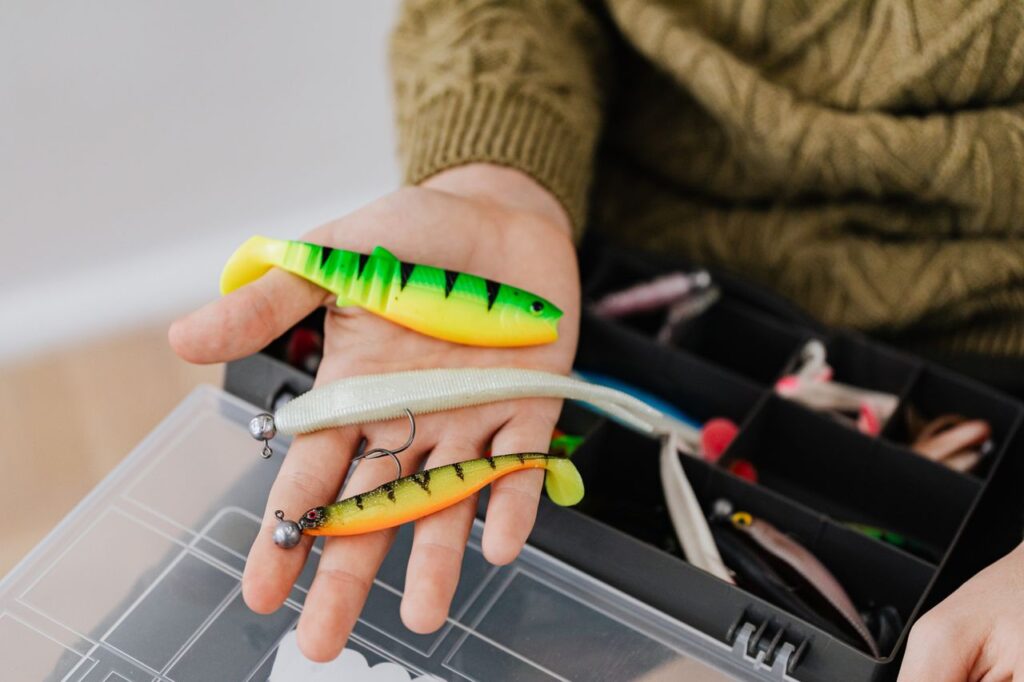
Fishing bait has one job: convince a fish that your offering is worth eating. While anglers often focus on buying a new rod, reel, or electronics, bait selection usually has a much greater influence on success.
Every species feeds differently. Bass ambush prey hiding near vegetation; trout often target drifting insects; catfish rely heavily on scent, and many saltwater predators chase schools of baitfish.
Water clarity, temperature, current, season, and available forage all influence what fish choose to eat. Matching your bait to those conditions consistently produces more bites than relying on a single favorite lure or technique.
Key Takeaways
- Fishing bait is most effective when it matches the target species’ natural diet, feeding behavior, and the surrounding water conditions.
- Both live bait and artificial lures can produce excellent results, but each performs better in different situations depending on season, water clarity, and fish activity.
- Factors such as water temperature, current, fishing location, and presentation are just as important as the bait itself.
- Choosing the correct hook, rig, and terminal tackle helps your bait move naturally, improves hook-up rates, and reduces lost fish.
- Successful anglers adapt their bait selection throughout the year instead of relying on a single lure or technique.
What Is Fishing Bait?
Fishing bait refers to any natural or artificial material attached to a hook to encourage fish to strike. Effective bait appeals to one or more of a fish’s primary senses, including smell, sight, vibration, and movement.
Some fish locate food primarily through scent. Others react to flashing colors, fleeing prey, or subtle water vibrations. Predatory species may attack out of hunger, while territorial fish often strike simply to eliminate an intruder from their area.
Successful bait selection involves understanding how fish behave under changing environmental conditions rather than relying on luck.
Although the goal remains the same, different baits attract fish in different ways. The four primary attraction factors include:
| Attraction Method | How It Works | Examples |
| Scent | Fish detect natural odors through smell and taste. | Worms, shrimp, squid, cut bait, stink bait |
| Appearance | Shape and color imitate natural prey. | Soft plastics, swimbaits, crankbaits |
| Movement | Natural or angler-created action triggers strikes. | Live minnows, jerkbaits, frogs |
| Vibration | Pressure waves activate a fish’s lateral line. | Spinnerbaits, chatterbaits, spoons, jigs |
Although anglers often use the terms interchangeably, bait and lures aren’t identical.
Natural bait consists of real food that fish would encounter in nature. Artificial lures imitate prey without being actual food.
Modern fishing lures rely on retrieve speed, vibration, flash, color, and presentation to convince fish to attack.
Both approaches catch fish extremely well when matched to the right conditions.
Why Choosing the Right Bait Matters
The same bait rarely performs equally well everywhere. Fish respond differently depending on their environment, available food, and feeding activity. Choosing bait that matches the conditions greatly improves your chances of success.
Water Conditions
Water clarity affects how fish locate food. In crystal-clear lakes and streams, fish can closely inspect bait before striking, making natural colors and realistic presentations more effective.
In muddy or stained water, visibility is limited, so fish rely more on vibration, scent, and sound.
Under these conditions, brightly colored lures, rattling crankbaits, spinnerbaits, and scented bait are often easier for fish to find.
Target Species
Different fish have different feeding habits and preferred prey. Bass commonly chase baitfish, frogs, and crayfish, making crankbaits, spinnerbaits, and soft plastic worms productive choices.
Catfish, on the other hand, depend heavily on scent and are more likely to locate fresh cut bait, shrimp, or stink bait along the bottom than chase a fast-moving lure.
Fishing Location
The type of water you fish in influences how bait should be presented. River fish often hold behind rocks, logs, and other current breaks where drifting food naturally passes by.
In lakes and ponds, fish may patrol weed edges, submerged timber, docks, drop-offs, or open-water structure in search of prey.
Matching both the bait and its presentation to the location creates a more natural offering.
Season
Seasonal changes affect water temperature and fish metabolism. During summer, warmer water increases feeding activity, allowing fish to chase larger bait and faster-moving lures.
As temperatures drop in fall and winter, fish conserve energy and typically respond better to smaller bait presented with slower, more deliberate retrieves.
Fishing Technique
The way you fish should also influence your bait choice. Drift fishing favors natural bait that moves with the current, while bottom fishing often relies on scented bait that remains in one area.
Casting and trolling usually work well with artificial lures that cover water efficiently, while jigging requires bait that responds naturally to vertical rod movements.
Fly fishing and ice fishing each use specialized presentations designed for those unique environments.
The Main Types of Fishing Bait
Fishing bait falls into several major categories, each serving different situations and target species.
Natural Bait
Worms
Earthworms remain one of the most versatile freshwater fishing baits available. They catch bluegill, bass, trout, crappie, perch, sunfish, catfish, carp, and numerous additional species.
Threading only part of the worm onto a bait-holder hook allows the remaining section to move naturally. That motion creates constant attraction, especially in ponds, rivers, and lakes.
Nightcrawlers
Nightcrawlers are larger than standard earthworms, making them ideal for bigger fish. They excel on bass, walleye, catfish, trout, and carp.
Because of their size, anglers often use only half of a nightcrawler for smaller species. Large fish commonly consume an entire crawler.
Minnows
Minnows imitate one of the most common forage fish found throughout freshwater systems.
Predatory fish, including bass, crappie, walleye, pike, musky, trout, and even large catfish, actively hunt minnows.
Several hooking methods work well, and the best choice depends on how you plan to present the bait.
Hooking a minnow through both lips is ideal for drifting or trolling because it keeps the bait facing forward as it moves through the water, creating a natural presentation while reducing line twist.
Placing the hook just behind the dorsal fin allows the minnow to swim freely, making it an excellent option for fishing beneath a float or with suspended rigs where lively movement attracts nearby predators.
Tail-hooking creates a fleeing action as the minnow attempts to swim away from the hook, making it particularly effective for suspended presentations or when targeting aggressive species such as bass, walleye, and pike that often attack prey from behind.
Leeches
Leeches produce outstanding results during summer and early fall, especially for walleye and smallmouth bass.
Their undulating swimming action remains lively for extended periods, making them particularly effective under slip floats or slowly drifted along rocky structure.
Crickets
Crickets attract numerous panfish species because insects naturally fall into the water throughout the warmer months.
Bluegill, perch, crappie, and trout frequently strike crickets presented beneath a small float. Hook the cricket lightly through the collar behind its head to preserve movement.
Grasshoppers
Grasshoppers become exceptional bait during late summer when fields border rivers and streams. Natural winds regularly blow them into the water, creating familiar feeding opportunities for trout, bass, and panfish.
Minimal hook penetration allows the insect to continue kicking naturally.
Shrimp
Live shrimp dominate many inshore saltwater fisheries. Redfish, snook, speckled trout, flounder, pompano, snapper, and countless additional saltwater species feed heavily on shrimp.
Hooking methods vary depending on presentation. Tail-hooking encourages natural swimming, while head-hooking performs well for bottom rigs.
Live Squid
Live squid is one of the most effective natural baits for offshore fishing because it closely resembles the prey that many pelagic and reef-dwelling predators feed on.
Its natural swimming motion, combined with the scent it releases in the water, makes it highly attractive to powerful game fish.
Live squid consistently produces strikes from species such as tuna, mahi-mahi, amberjack, grouper, snapper, and king mackerel, particularly around reefs, wrecks, offshore structures, and open-water feeding areas.
To keep the bait swimming naturally, we found that it’s best to use circle hooks, which help reduce deep hooking while improving hook placement in the corner of the fish’s mouth for easier releases when practicing catch and release.
Cut Bait
Cut bait consists of freshly cut sections of fish. The exposed flesh releases oils and scents that attract predators.
Popular species for cut bait include catfish, pike, musky, sharks, redfish, and bluefish. Fresh pieces usually outperform older bait because they release stronger natural oils.
Clams
Clams perform particularly well in surf fishing and shallow saltwater environments.
Their strong scent appeals to striped bass, black drum, sheepshead, and numerous bottom-feeding species.
Mussels
Mussels naturally occur in many freshwater rivers and lakes. Carp, freshwater drum, and other bottom feeders readily consume them.
Corn
Although simple, corn consistently catches carp in many fisheries where regulations allow its use. Always verify local fishing regulations before using corn.
Many anglers chum lightly with loose kernels before presenting baited hooks nearby.
Salmon Eggs
Salmon eggs remain a classic trout and salmon bait. Their bright appearance, combined with natural scent, makes them particularly productive in streams during spawning periods.
Egg hooks securely hold the delicate bait while minimizing damage.
Prepared/Manufactured Baits
Dough Bait
Dough bait dominates stocked trout fisheries. The floating consistency keeps the bait suspended above the bottom while releasing attractants into the surrounding water.
Different colors allow anglers to adjust according to water clarity and sunlight.
Cheese Bait
Cheese bait appeals primarily to catfish because of its strong scent profile. Many commercial formulas include additional oils and flavorings that disperse through slow-moving water.
Bait-holder hooks improve retention during casting.
Stink Bait
Stink bait produces perhaps the strongest scent of any prepared fishing bait.
Although unpleasant for anglers, it excels for channel catfish and blue catfish, particularly in warm water where scent disperses rapidly.
Dip worms, bait tubes, and specialized holders reduce the amount of bait lost during casting.
Artificial Bait and Fishing Lures
Soft Plastics
Soft plastics remain among the most productive artificial baits available. Soft plastic worms imitate worms, leeches, and baitfish, depending on how they’re rigged.
Soft plastic craws imitate crayfish, one of the primary food sources for bass, walleye, and many other freshwater predators. They’re especially effective when worked slowly around rocks, submerged timber, docks, and vegetation where crayfish naturally live.
Grubs feature a soft, curly tail that produces constant movement even at slow retrieve speeds, making them reliable choices for crappie, bass, trout, and walleye.
Swimbaits are designed to closely resemble baitfish, using lifelike body shapes and natural swimming action to attract predators in both freshwater and saltwater.
Their versatility allows anglers to fish them at various depths and retrieve speeds, making them effective across a wide range of conditions.
Hard Baits
Hard-bodied lures trigger reaction strikes through vibration, flash, and realistic movement.
Crankbaits are designed with diving lips that allow them to reach specific depths, making them effective for covering water and targeting fish holding near submerged structure.
As they bounce off rocks, stumps, and other cover, they imitate fleeing baitfish and often trigger reaction strikes from bass, walleye, and other predators.
Jerkbaits are particularly productive in cooler water, where a series of sharp twitches followed by long pauses mimics an injured baitfish that predators find difficult to resist.
For surface fishing, topwater poppers create splashes and popping sounds that imitate struggling prey, often provoking explosive strikes from aggressive fish feeding near the surface.
In heavy vegetation, hollow-body frogs offer a nearly weedless presentation, allowing anglers to fish through lily pads, hydrilla, and matted grass where traditional treble-hook lures would quickly become snagged.
Metal Lures
Metal lures offer durability, casting distance, and excellent vibration.
Spinnerbaits combine one or more spinning metal blades with a skirted hook, producing both flash and vibration that help fish locate the lure in clear and stained water. They’re especially effective around vegetation, wood, and other cover where predatory fish ambush passing prey.
Spoons feature a curved metal body that creates an erratic wobbling action as they move through the water, closely resembling an injured baitfish. Their simplicity and long casting distance make them popular for targeting trout, salmon, pike, and a variety of saltwater species.
Jigs are among the most versatile artificial lures because they can be paired with different trailers to imitate crayfish, baitfish, squid, or other bottom-dwelling forage.
They can also be fished in shallow water, deep structure, heavy cover, or open water, making them a dependable choice for a wide range of species and fishing conditions.
Retrieve speed plays a major role in lure performance. Faster retrieves often trigger reaction strikes during warm-water periods, while slower presentations typically perform better when fish become less active.
Artificial lures also provide nearly endless color options, allowing anglers to match local forage or increase visibility under changing water conditions.
Fly Fishing Baits
Flies
Dry flies imitate adult insects floating on the surface. They excel during insect hatches when trout actively feed upward.
Nymphs
Nymphs imitate immature aquatic insects drifting below the surface. Because fish consume underwater insects throughout the year, nymphs consistently produce strikes even when no hatch is visible.
Streamers
Streamers imitate baitfish, leeches, crayfish, and other larger prey. They attract predatory species, including trout, bass, pike, and muskies.
Artificial Eggs
Artificial egg patterns imitate loose salmon or trout eggs drifting downstream. These presentations remain highly productive during spawning seasons when fish actively feed on nutrient-rich eggs carried by the current.
Live Bait vs. Artificial Bait
Both live bait and artificial bait consistently catch fish, but each excels under different conditions.
Live bait offers unmatched realism through natural scent and movement, while artificial lures allow anglers to fish more efficiently, cover larger areas, and imitate a wide range of prey.
Many experienced anglers carry both. If fish are actively feeding, artificial lures often locate fish faster. When the bite slows or fish become selective, switching to live bait frequently produces additional catches.
| Feature | Live Bait | Artificial Bait |
| Cost | Ongoing expense because bait must be replaced | Higher upfront cost but reusable |
| Convenience | Requires care, storage, and frequent replacement | Easy to store and immediately ready to use |
| Durability | Delicate and perishable | Can last for years with proper care |
| Storage | Often needs cool temperatures, moisture, or aeration | Stored in tackle boxes with minimal maintenance |
| Fish Attraction | Natural scent, taste, and movement | Relies on appearance, vibration, flash, and angler presentation |
| Skill Required | Beginner-friendly | Requires practice with retrieval techniques |
| Reusability | Single use | Reusable unless damaged |
| Best Species | Catfish, trout, panfish, walleye, saltwater species | Bass, pike, musky, walleye, trout, saltwater predators |
Artificial bait has become increasingly popular because it allows anglers to adapt quickly. A single tackle box may contain hundreds of lure combinations for different depths, species, and weather conditions.
Even so, live bait remains difficult to beat when fish become inactive or heavily pressured.
From experience, we found that artificial lures often help find active fish quickly because they cover water efficiently. Once fish are located but become reluctant to bite, switching to live bait is effective to extend the bite rather than moving to another location immediately.
Fishing Bait Selection Quick Guide
| If… | Choose… | Why It Works |
| Water is crystal clear | Natural-colored soft plastics, live minnows, worms | Fish have time to inspect bait, so realism matters most. |
| Water is muddy or stained | Spinnerbaits, chatterbaits, bright lures, cut bait | Vibration, scent, and contrast help fish locate bait. |
| Water temperature is below 50°F | Smaller bait with slow retrieves | Cold-water fish conserve energy and avoid chasing fast prey. |
| Water temperature is above 70°F | Larger swimbaits, crankbaits, topwater lures | Active fish are more willing to chase larger meals. |
| Fishing heavy vegetation | Texas-rigged worms, frogs | Weedless presentations reduce snags. |
| Fishing in open water | Crankbaits, spoons, swimbaits | Efficiently cover large areas and imitate baitfish. |
| Unsure where fish are holding | Artificial lures | Cover the water quickly until active fish are located. |
| Fish are inactive or pressured | Live bait | Natural scent and movement often trigger reluctant fish. |
Best Fishing Bait by Fish Species
Different fish prefer different food sources. Matching bait to the feeding habits of your target species dramatically improves success compared to using the same presentation everywhere.
Bass
Bass are opportunistic predators that feed on a wide variety of prey, including baitfish, crayfish, frogs, insects, and even small mammals. Because their diet changes with the season, water conditions, and available forage, they readily strike both live bait and artificial lures.
Soft plastic worms remain one of the most reliable bass baits ever developed. Their versatility allows anglers to fish them weightless around docks, rig them Texas style to work through heavy vegetation, or present them on a Carolina rig to cover deeper points and flats.
When bass are actively hunting, spinnerbaits are excellent choices, particularly in stained water where their spinning blades create flash and vibration that fish can detect through their lateral line.
Crankbaits also shine when covering large areas because they dive to specific depths and imitate fleeing baitfish, making them ideal for locating active fish.
Around thick vegetation such as lily pads, hydrilla, and matted grass, hollow-body frogs provide a nearly weedless presentation that can trigger explosive surface strikes in areas where treble-hook lures would constantly snag.
Although artificial lures dominate modern bass fishing, live minnows remain highly effective when fish become less aggressive during cold fronts, periods of heavy fishing pressure, or other conditions that make bass reluctant to chase fast-moving lures.
We found it’s especially effective to reach for large swimbaits when targeting bass, but local forage often tells a different story.
If young-of-the-year baitfish dominate the lake, downsizing to a smaller soft plastic or paddle tail frequently produces more consistent bites than throwing oversized lures.
Trout
Trout feed on a diverse diet that includes insects, crustaceans, baitfish, and other food drifting naturally with the current. Because they have excellent eyesight, they’re often cautious feeders, making realistic bait presentation just as important as bait selection.
Live worms remain one of the most dependable baits for both stocked and wild trout throughout the year. Salmon eggs are especially productive during spawning periods, while dough bait continues to be a favorite in stocked lakes because it is easy to use and highly effective.
In rivers and streams, fly anglers often match local insect activity with dry flies, nymphs, and streamers to imitate the food trout are actively feeding on.
Small spoons are another proven option, creating a flashing, wobbling action that resembles an injured baitfish and frequently triggers reaction strikes.
Water clarity should also influence your approach. In clear water, trout are more likely to inspect a bait before striking, so natural colors, lighter fishing line, and subtle presentations generally produce the best results.
When the water becomes slightly stained, brighter lure colors and more visible presentations can help trout locate your bait more easily.
Catfish
Catfish rely far more on their sense of smell and taste than on their eyesight, making scent one of the most important factors when choosing bait.
Fresh cut bait is a longtime favorite because it releases natural oils that create a scent trail fish can follow over considerable distances.
Channel catfish also respond exceptionally well to stink bait, while cheese bait remains a productive option in many ponds, lakes, and reservoirs.
Natural baits such as nightcrawlers continue to catch both small and trophy-sized catfish, particularly after rainfall when worms are washed into the water.
Fresh shrimp is another dependable choice in freshwater lakes, rivers, and tidal systems.
Regardless of the bait used, slow presentations fished directly on or just above the bottom generally produce the best results, as this is where catfish spend much of their time searching for food.
Crappie
Crappie primarily feed on small baitfish and aquatic insects, making compact presentations the most effective.
Live minnows suspended beneath a float remain one of the most consistent ways to catch crappie throughout the year, particularly around brush piles, docks, and standing timber.
Artificial lures also perform exceptionally well. Small soft plastic grubs on lightweight jig heads imitate juvenile baitfish and insects, while tube jigs have long been a favorite for fishing around submerged vegetation and woody cover.
Since crappie frequently change depth as water temperatures and seasons change, adjusting the depth of your presentation is often more important than changing bait.
Walleye
Walleye are most active during dawn, dusk, and overcast conditions, relying on both their excellent low-light vision and keen sense of smell to locate prey.
Live leeches are among the best summer baits, while minnows remain productive throughout much of the year, especially during the spring and fall when baitfish gather along shorelines and rocky structure.
Jigs tipped with live minnows combine natural scent with precise depth control, making them one of the most effective walleye presentations available.
Soft plastics are equally effective when worked slowly across rocky points, reefs, drop-offs, and other structures.
Because walleye rarely chase fast-moving prey for long distances, slow, deliberate retrieves generally outperform aggressive presentations.
Pike and Musky
Northern pike and musky are aggressive ambush predators capable of attacking surprisingly large prey. As a result, larger bait often produces better results than smaller presentations.
Swimbaits closely imitate the large baitfish these predators commonly hunt, while oversized spoons create flash and vibration that attract fish from long distances.
Jerkbaits are another proven choice, especially when worked with sharp twitches followed by pauses that imitate an injured baitfish.
During colder months, fresh cut bait can be particularly effective because it provides a scent trail that helps predators locate food when they’re feeding less aggressively.
Since both species have razor-sharp teeth, pairing your bait with a wire leader helps prevent bite-offs and reduces the chance of losing both the fish and your lure.
Panfish
Panfish such as bluegill, perch, pumpkinseed, and redear sunfish feed primarily on insects, worms, larvae, and other small aquatic organisms.
Because of their relatively small mouths, compact bait and appropriately sized hooks are essential. Small pieces of worm remain one of the easiest and most productive baits for anglers of all skill levels.
Crickets are another excellent option during the warmer months, naturally imitating insects that frequently fall into ponds, lakes, and streams.
Small jigs tipped with soft plastics or live bait also produce consistent action throughout the year, especially when fished beneath a float near submerged vegetation, docks, or fallen timber.
Saltwater Species
Saltwater fish feed on an enormous variety of prey, so successful bait selection often depends on the species being targeted and the environment being fished.
Live shrimp remains one of the most versatile natural baits, consistently attracting redfish, speckled trout, snook, flounder, and many other inshore species.
Offshore anglers frequently rely on live or fresh squid to target snapper, grouper, tuna, amberjack, and other powerful predators.
Fresh cut bait is another highly effective option because it releases oils and scent that attract sharks, bluefish, king mackerel, and numerous reef fish.
Clams are widely used for surf fishing and bottom fishing, while artificial swimbaits imitate common coastal forage such as mullet and sardines.
Bucktail jigs round out the selection as one of the most versatile saltwater lures available, producing reliable catches by imitating baitfish, shrimp, squid, and other forage, depending on how they’re retrieved.
Choosing Fishing Bait Based on Water Conditions
Fish respond differently as water clarity, temperature, current, and available light change throughout the day.
We found that it’s best to adjust both bait selection and presentation instead of relying on a single favorite lure.
Clear Water
Clear water allows fish to inspect bait carefully before striking. Natural-looking colors generally outperform bright patterns. Soft plastics in green pumpkin, watermelon, smoke, and shad colors closely resemble common forage.
Long casts, lighter fishing line, and realistic retrieves help avoid spooking cautious fish. Live bait also performs exceptionally well because it provides authentic movement that fish recognize immediately.
Murky Water
Reduced visibility shifts a fish’s attention toward vibration, scent, and sound.
Bright colors such as chartreuse, white, orange, and black create stronger silhouettes. Spinnerbaits, chatterbaits, crankbaits with rattles, and scented soft plastics become increasingly effective.
Catfish, in particular, often rely almost entirely on scent under muddy conditions, making cut bait and prepared bait excellent choices.
Cold Water
Cold water slows a fish’s metabolism, reducing feeding activity and making fish less willing to chase fast-moving prey.
Smaller bait generally produces better results because fish expend less energy eating it. Jerkbaits with long pauses, finesse soft plastics, live minnows, worms, and slowly worked jigs consistently outperform fast-moving presentations.
One mistake we see anglers make in cold water is changing lure colors repeatedly when fish stop biting. Experienced anglers often see better results by keeping the same bait but slowing the retrieve, adding longer pauses, or downsizing the presentation.
Presentation usually has a greater impact than color when fish are conserving energy.
Warm Water
Warm water increases metabolism and encourages more aggressive feeding.
Fish actively pursue larger prey, allowing anglers to use bigger swimbaits, crankbaits, spinnerbaits, frogs, buzzbaits, and topwater poppers.
Retrieve speed can also increase without reducing effectiveness. Early morning and evening remain especially productive during extremely hot weather.
Fast Current
Fish living in rivers conserve energy by holding behind rocks, fallen timber, bridge pilings, and current breaks. Heavier sinkers and jig heads help maintain bottom contact.
Natural bait drifting with the current often appears more realistic than stationary presentations.
Compact lures that resist excessive spinning perform better than bulky offerings that wash unnaturally downstream.
Still Water
Lakes, ponds, and reservoirs provide fish with more time to examine potential food. Subtle presentations often outperform aggressive retrieves.
Natural scent becomes increasingly important when fish are inactive. Soft plastics worked slowly along the bottom, live worms beneath floats, and suspending jerkbaits frequently produce consistent bites.
Matching local forage becomes especially important in clear lakes with abundant baitfish.
Choosing Bait by Fishing Location
Every body of water presents unique feeding opportunities. Fish adapt to available forage, water movement, depth, and surrounding habitat, making location an important factor in bait selection.
Lakes
Lakes support diverse forage, including baitfish, crayfish, insects, frogs, and aquatic vegetation.
Soft plastic worms, crankbaits, spinnerbaits, jigs, and live minnows all perform well depending on depth and season. Points, weed edges, submerged timber, docks, and drop-offs consistently attract feeding fish.
Rivers
Current shapes nearly every aspect of river fishing. Fish position themselves where moving water delivers food while minimizing energy expenditure.
Live worms, minnows, crankbaits, jigs, and drifting natural bait all perform well around eddies, seams, rock piles, and fallen trees. Presentation should appear natural as the bait moves with the current.
Ponds
Ponds often contain concentrated fish populations with relatively predictable feeding patterns.
Worms remain outstanding choices for beginners, while small spinnerbaits, soft plastics, and crickets consistently catch bass and panfish.
Quiet presentations usually outperform excessive casting or noisy lure splashes in smaller bodies of water.
Streams
Streams frequently contain trout, panfish, and smallmouth bass. In these cases, natural drift becomes the priority.
Grasshoppers, worms, salmon eggs, flies, and small inline spinners imitate much of the natural forage available in moving water. Keeping presentations upstream and allowing bait to drift naturally improves success.
Surf Fishing
Surf fishing targets species feeding within the breaking waves and nearby troughs.
Fresh shrimp, clams, squid, and cut bait remain among the most dependable natural options. Bucktail jigs, casting spoons, and soft plastic swimbaits cover larger stretches of shoreline while locating active fish.
Paying attention to tides significantly improves bait placement.
Offshore Fishing
Offshore predators feed on schools of baitfish, squid, and other pelagic prey.
Live squid, live baitfish, large swimbaits, trolling lures, and fresh cut bait all attract powerful species such as tuna, mahi-mahi, king mackerel, grouper, and amberjack.
Circle hooks have become increasingly popular because they improve survival rates for released fish while reducing deep hooking.
Ice Fishing
Winter ice dramatically changes fish behavior. Cold water reduces activity, making smaller presentations more productive.
Wax worms, spikes, minnows, soft plastics, and compact jigging spoons remain popular choices for trout, perch, crappie, walleye, and panfish.
Subtle jigging movements also generally outperform aggressive rod action beneath the ice.
Choosing Fishing Bait by Season
Fish behavior changes throughout the year as water temperature, daylight hours, spawning cycles, and available forage change.
A bait that produces dozens of fish in summer may receive little attention during winter. Understanding seasonal feeding patterns makes bait selection much more consistent.
Spring
Spring marks one of the best fishing seasons of the year. Rising water temperatures increase fish activity after the slower winter months, and many species begin moving toward shallow water to feed before spawning.
Bass become increasingly aggressive as they stage near spawning areas, making soft plastic worms, spinnerbaits, chatterbaits, crankbaits, and jigs excellent choices.
Trout actively feed on insects, worms, salmon eggs, and small baitfish carried by spring runoff.
Walleye often respond well to live minnows and jigs, while crappie move toward shallow brush and docks where minnows and tube jigs produce steady action.
Fish are willing to chase moving baits more frequently than during winter, although water temperatures can still vary significantly between mornings and afternoons.
Summer
Summer brings the warmest water temperatures and the highest metabolic rates for many freshwater and saltwater species.
Fish generally feed more often, but they also seek comfortable water temperatures. Early mornings, evenings, and overnight periods frequently produce the best action, especially on sunny days.
Topwater frogs, buzzbaits, poppers, spinnerbaits, swimbaits, and crankbaits excel when bass actively chase baitfish.
Panfish aggressively strike crickets and worms near shoreline vegetation. Walleye often move deeper during daylight hours, where leeches and live minnows remain productive.
Saltwater anglers frequently rely on live shrimp, squid, cut bait, and artificial swimbaits around reefs, inlets, and grass flats.
Larger bait often becomes more effective during summer because fish require more energy to sustain their increased activity.
Fall
Fall creates another outstanding fishing season as fish prepare for winter by feeding heavily.
Schools of baitfish become major food sources, attracting bass, walleye, pike, musky, striped bass, and many saltwater predators.
Swimbaits, jerkbaits, crankbaits, spinnerbaits, and spoons closely imitate the baitfish that dominate autumn feeding patterns.
Live minnows also become extremely productive because predators actively target larger meals before colder weather slows their metabolism.
Retrieves can remain moderately aggressive, although cooling water gradually favors slower presentations later in the season.
Winter
Winter presents the greatest challenge because cold water significantly reduces fish metabolism. Rather than chasing fast-moving prey over long distances, fish conserve energy and prefer meals that require little effort.
Live minnows, worms, compact jigs, finesse soft plastics, and small spoons generally outperform oversized presentations. Ice anglers often rely on wax worms, spikes, minnows, and small jigging lures to tempt inactive fish beneath the ice.
Long pauses, subtle movements, and slower retrieves become much more important than lure speed. Throughout the winter, fish usually feed during relatively short windows, making patience and presentation more valuable than constantly changing bait.
Seasonal Fishing Bait Calendar
| Season | Fish Activity | Best Baits | Presentation |
| Spring | Fish move shallow and feed aggressively before spawning | Worms, minnows, spinnerbaits, chatterbaits, jigs | Moderate retrieve with pauses |
| Summer | High metabolism; fish feed early and late | Frogs, crankbaits, swimbaits, shrimp, crickets | Faster retrieves during feeding periods |
| Fall | Heavy feeding before winter | Swimbaits, jerkbaits, spoons, live minnows | Cover the water to locate baitfish schools |
| Winter | Slow metabolism and shorter feeding windows | Live minnows, finesse plastics, wax worms, small jigs | Slow presentations with long pauses |
How Fish Choose Their Food
Fish don’t simply eat whatever appears in front of them. Their feeding decisions depend on biology, environmental conditions, available forage, and instinct.
Vision
Most game fish possess excellent eyesight, particularly in clear water.
Species such as bass, trout, pike, musky, and many saltwater predators often evaluate a bait’s size, shape, color, and movement before striking.
In bright conditions, natural-looking presentations generally produce better results because fish have more time to inspect them. During low-light periods, stronger silhouettes and contrasting colors become easier to detect.
Smell
Some species rely heavily on scent. Catfish provide the best example, using highly developed sensory organs to locate food long before they see it.
Carp, sturgeon, many sharks, and numerous bottom-feeding fish also depend heavily on smell.
Fresh cut bait, shrimp, squid, worms, cheese bait, and stink bait all release scent trails that help fish locate food in murky water or complete darkness.
The Lateral Line
Fish possess a specialized sensory system called the lateral line that detects vibration and pressure changes in the surrounding water.
Spinnerbaits, chatterbaits, crankbaits, jigs, spoons, and swimbaits all create vibrations that predators can detect without relying entirely on vision.
This becomes especially important in muddy water, heavy vegetation, or nighttime conditions.
Water Temperature
Water temperature affects both fish metabolism and feeding frequency. Warm water generally increases activity, allowing fish to chase faster-moving prey over greater distances.
Cold water slows digestion, causing fish to feed less often and prefer slower, easier meals.
Matching retrieve speed to water temperature frequently makes more difference than changing lure color.
Current
Current constantly transports food through rivers, streams, tidal creeks, and inlets. Rather than swimming continuously, fish position themselves behind rocks, logs, bridge pilings, weed lines, and drop-offs where they can intercept drifting prey while conserving energy.
Natural presentations that move with the current usually appear more convincing than bait moving unnaturally against it.
Oxygen Levels
Healthy oxygen levels encourage active feeding. Moving water typically contains more oxygen than stagnant water, while wind, wave action, and aquatic vegetation also influence oxygen availability.
During extremely hot weather, fish often move deeper or gather near areas where fresh water enters lakes and reservoirs. Understanding these seasonal movements helps anglers select both the right location and the right bait.
Natural Forage
Fish spend their lives eating whatever food is most abundant.
If bluegill dominate a lake, bass frequently target bluegill-shaped prey. Rivers rich in crayfish often reward craw-style soft plastics and jigs. Coastal predators commonly feed on shrimp, mullet, sardines, squid, and crabs.
Observing local forage remains one of the easiest ways to narrow bait selection.
Feeding Windows
Fish rarely feed at maximum intensity all day. Many species become most active around sunrise, sunset, weather changes, tidal movement, or periods of reduced fishing pressure.
Rather than constantly changing bait, we found that it’s often best to adjust presentation speed and remain prepared when feeding windows open.
How to Rig Different Types of Fishing Bait
Even the best bait performs poorly when rigged incorrectly. Proper rigging improves natural movement, increases hookup percentages, reduces snags, and helps bait stay securely attached during casting.
Worm Hooking Methods
Worms can be rigged several ways depending on the target species and fishing technique.
Threading the worm completely onto the hook creates a compact presentation for stronger current. Hooking only one end allows the remaining portion to move freely, producing constant motion that attracts panfish, trout, and bass.
Large nightcrawlers can also be divided into smaller sections when targeting bluegill, perch, or stocked trout.
Keeping enough hook point exposed improves hook penetration while still holding the bait securely.
Hooking Minnows
Minnows remain lively the longest when hooked carefully.
Passing the hook through both lips keeps the minnow swimming naturally while trolling or drifting forward. Hooking behind the dorsal fin encourages more erratic movement beneath a float or suspended rig.
Tail-hooking works well when fish are striking from behind. Avoid damaging the spine, as injured minnows quickly lose their natural swimming action.
Rigging Shrimp
Live shrimp may be hooked through the tail or lightly beneath the horn near the head.
Tail-hooking allows shrimp to swim naturally away from predators, making it effective beneath popping corks and free-lined presentations. Head-hooking provides better control when bottom fishing or fishing in stronger current.
Fresh dead shrimp can also be threaded onto bait-holder hooks for surf fishing and pier fishing.
Using Cut Bait
Fresh cut bait should remain securely attached while allowing scent to disperse freely.
Circle hooks work particularly well because they naturally rotate into the corner of a fish’s mouth during steady pressure. Leaving portions of exposed flesh increases scent release while ensuring adequate hook exposure.
Large chunks target trophy fish, while smaller strips often attract a wider variety of species.
Rigging Soft Plastics
Soft plastics can imitate worms, crayfish, baitfish, leeches, salamanders, and numerous other forage species. Different rigging methods dramatically change how the same bait behaves underwater.
Texas Rig
The Texas rig uses an offset worm hook with the hook point lightly buried inside the plastic, creating an almost weedless presentation.
It excels around grass, brush, timber, docks, and other heavy cover where exposed hooks frequently snag.
Carolina Rig
The Carolina rig separates the sinker from the bait using a leader.
This setup allows soft plastics to float or glide naturally behind the weight, making it effective across deep flats, points, and rocky bottoms.
It remains a favorite for locating scattered bass over large areas.
Jig Head
A jig head combines weight and hook into one component.
Soft plastic grubs, swimbaits, craws, and worms all perform well on jig heads because they maintain consistent depth while producing realistic swimming action.
Different jig weights accommodate shallow water, deep structure, rivers, and offshore fishing.
Drop Shot
The drop shot suspends the bait above the sinker, keeping it in the strike zone for extended periods.
Finesse worms, minnows, and small soft plastics appear almost weightless, making this rig especially productive for pressured bass and deep-water fish.
Wacky Rig
The wacky rig hooks a soft plastic worm through its center rather than the nose.
Both ends flutter independently as the bait sinks, creating subtle movement that often triggers bites from inactive bass.
This presentation works particularly well around docks, vegetation, and shoreline cover.
Choosing the Right Rig for Different Types of Cover
| Fishing Cover | Recommended Rig | Why |
| Thick grass and weeds | Texas Rig | Weedless design slips through vegetation. |
| Rocky bottoms | Carolina Rig | Keeps bait moving naturally while reducing snags. |
| Docks and timber | Wacky Rig | Slow fluttering fall attracts suspended fish. |
| Deep open water | Drop Shot | Keeps bait suspended in the strike zone. |
| Rivers with current | Jig Head | Maintains bottom contact while drifting naturally. |
| Offshore structure | Circle Hook with live bait | Improves hook placement while reducing deep hooking. |
Hooks for Different Fishing Baits
Choosing the correct hook improves bait presentation while increasing hookup percentages and reducing unnecessary damage to fish.
| Hook Type | Best Bait | Best Fish | Advantages |
| Circle Hook | Squid, shrimp, cut bait, live bait | Catfish, snapper, tuna, sharks, redfish | Excellent corner-of-mouth hookups and easier fish release |
| J-Hook | Worms, minnows, shrimp | Bass, trout, panfish, walleye | Versatile and suitable for many fishing techniques |
| Octopus Hook | Minnows, salmon eggs, leeches | Trout, salmon, walleye, crappie | Wide gap improves hookups with live bait |
| Weedless Hook | Soft plastic worms, frogs, craws | Bass, pike | Reduces snagging in vegetation and timber |
| Treble Hook | Crankbaits, jerkbaits, topwater lures, spoons | Bass, pike, musky, trout | Multiple hook points improve hookups on reaction strikes |
| Egg Hook | Salmon eggs | Trout, salmon | Holds delicate bait securely without crushing it |
| Bait-Holder Hook | Worms, cheese bait, dough bait | Catfish, trout, panfish | Small barbs keep soft bait from sliding off |
Hook size should match both the bait and the fish being targeted. Oversized hooks often reduce natural movement, while hooks that are too small may fail to penetrate properly.
Matching Bait Size to Fish Size
Bait size influences which fish are likely to strike. Matching the presentation to the size of the available forage often produces more consistent results than automatically choosing the largest or smallest option.
Small Fish
Species such as bluegill, perch, crappie, and stocked trout feed on insects, larvae, tiny baitfish, and small worms.
Small hooks paired with pieces of worm, crickets, wax worms, salmon eggs, micro jigs, or compact soft plastics provide realistic presentations that smaller fish can easily eat.
Medium Fish
Bass, walleye, larger trout, freshwater drum, and average-sized catfish consume a wider range of prey.
Nightcrawlers, medium-sized minnows, shrimp, craw-style soft plastics, spinnerbaits, crankbaits, tube jigs, and swimbaits closely match the forage these fish commonly encounter.
Choosing bait between three and six inches often covers a wide variety of species.
Trophy Fish
Large predators seek meals that justify the energy required to catch them.
Oversized swimbaits, large live baitfish, substantial pieces of fresh cut bait, whole squid, big spoons, and musky-sized jerkbaits help eliminate smaller fish while appealing to mature predators.
However, trophy fish don’t always require oversized bait. During cold water periods or when forage consists mainly of smaller baitfish, downsizing can still produce exceptional catches.
Artificial Lure Color Guide
Lure color often receives more attention than any other aspect of bait selection. While color certainly matters, it should be considered alongside water clarity, light conditions, forage, and lure action.
A realistic lure retrieved naturally usually outperforms an unrealistic retrieve with the “perfect” color.
We recommend that anglers follow a simple rule: match natural forage in clear water and increase contrast as visibility decreases.
| Water Condition | Recommended Colors |
| Clear Water | Green pumpkin, watermelon, smoke, shad, silver, translucent patterns |
| Muddy Water | Chartreuse, black and blue, orange, bright white, firetiger |
| Cloudy Conditions | White, pearl, chartreuse, bluegill patterns, gold |
| Bright Sun | Natural baitfish colors, green pumpkin, silver, brown, olive |
| Low Light | Black, black and blue, purple, dark green, white |
| Night Fishing | Black, black and blue, dark purple, large profile lures that create vibration |
Rather than carrying dozens of color variations, many anglers can confidently fish most situations with a small selection of natural and high-contrast colors.
Color becomes even more effective when paired with the right lure action.
For example, a green pumpkin soft plastic slowly worked along the bottom often resembles a crayfish in clear water, while a chartreuse spinnerbait retrieved through stained water creates both flash and vibration that fish can detect from greater distances.
Your Cheat Sheet for Choosing Fishing Bait
| Target Species | Primary Bait Choice | Optimal Conditions | Presentation Keyword |
| Bass | Soft Plastics (Worms/Craws), Minnows | Clear to stained water; vegetation & docks | Finesse (Cold) / Aggressive (Warm) |
| Catfish | Fresh Cut Bait, Stink/Cheese Bait | Murky water; river bends & deep lake holes | Static bottom rig (Heavy scent trail) |
| Trout | Live Earthworms, Salmon Eggs, Inline Spinners | Clear moving water; streams & alpine lakes | Natural drift (Match the current speed) |
| Crappie | Live Minnows, Small Tube Jigs | Suspended around brush piles & timber | Vertical jigging / Float suspension |
Common Fishing Bait Mistakes We See Anglers Make
Even quality bait can perform poorly when used incorrectly. Many unsuccessful fishing trips can be traced to presentation errors rather than poor bait selection.
Using Bait That Is Too Large
Many anglers assume that bigger bait always catches bigger fish. Large bait certainly has its place, particularly for trophy pike, musky, catfish, and saltwater predators, but oversized bait often discourages average-sized fish from striking.
Matching bait size to the local forage generally produces better results than simply increasing lure size.
Choosing the Wrong Hook
A hook should complement the bait rather than overpower it. Small worms threaded onto oversized hooks lose much of their natural movement. Likewise, tiny hooks may fail to penetrate the mouth of larger fish.
Selecting the proper hook style and size improves both presentation and landing percentages.
Fishing with Weak or Dead Live Bait
Healthy live bait constantly creates movement that attracts predators. Minnows swimming upside down, sluggish shrimp, lifeless worms, or dying crickets quickly become less appealing.
Replacing weakened bait often restores action without changing locations.
Retrieving Artificial Bait Too Quickly
Many fish prefer slower presentations than anglers naturally provide. Bass, walleye, trout, and crappie frequently inspect a lure before deciding to strike.
Slowing the retrieve, adding pauses, or varying the retrieve speed often triggers bites from fish that ignored a constant retrieve.
Ignoring Local Forage
Fish spend most of their lives feeding on what naturally exists in their environment.
A lake filled with bluegill produces bass that regularly hunt bluegill. Rivers rich in crayfish reward craw-style soft plastics and jigs. Coastal fish feeding on shrimp often respond better to shrimp imitations than baitfish profiles.
Observing nearby baitfish, insects, frogs, or crustaceans provides valuable clues when selecting bait.
Using the Wrong Lure Color
Color should support the presentation rather than become the sole focus.
Bright chartreuse lures may perform well in muddy water but appear unnatural in crystal-clear mountain streams. Likewise, translucent baitfish patterns become difficult for fish to locate in heavily stained water.
Matching visibility conditions generally produces more consistent results.
Poor Bait Storage
Improper storage reduces bait quality long before anglers reach the water.
Minnows require oxygen, worms need cool and moist bedding, and shrimp quickly spoil in warm temperatures.
Artificial lures also benefit from proper storage, especially soft plastics that can warp or react with incompatible materials.
Fishing with Old Bait
Fresh natural bait consistently outperforms spoiled alternatives.
Old shrimp, dried worms, oxidized cut bait, and stale prepared bait release less scent and appear less natural.
Checking bait before every trip helps avoid unnecessary frustration.
Mistakes Experienced Anglers Learn to Avoid
As anglers spend more time on the water, they often discover that successful fishing depends less on constantly changing baits and more on making small adjustments to presentation.
We found that it pays to spend additional time experimenting with retrieve speed, casting angle, depth, or rigging before switching to an entirely different lure.
Another common lesson is that local forage usually outweighs brand or lure popularity. A bait that’s producing excellent results on one lake may perform poorly elsewhere if it doesn’t resemble the prey fish are actively feeding on.
Observing baitfish activity, insects, crayfish, or other available forage often provides better clues than simply following the latest lure trends.
How to Store Fishing Bait Properly
Proper storage keeps bait effective, extends its lifespan, and reduces unnecessary waste. Storage methods vary depending on whether the bait is alive, natural, prepared, or artificial.
Worms
Worms remain healthiest in cool, moist bedding made from soil, peat moss, or commercial worm bedding.
Store them in a ventilated container inside a refrigerator or insulated cooler. Avoid direct sunlight and excessive moisture, both of which shorten their lifespan. Replace bedding periodically to maintain healthy worms over several weeks.
Minnows
Minnows require clean, oxygen-rich water. A bait bucket equipped with an aerator significantly improves survival during long fishing trips.
Water temperatures should remain relatively cool, especially during summer. Avoid overcrowding, as oxygen depletion increases rapidly when too many minnows occupy a small container.
Shrimp
Live shrimp should remain in circulating saltwater whenever possible. During transport, insulated bait buckets and portable aerators help maintain healthy oxygen levels.
Fresh, dead shrimp should be refrigerated immediately and used as soon as possible. Freezing extends storage but slightly reduces natural texture.
Squid
Fresh squid should remain on ice until use. Long-term storage requires freezing in airtight packaging to reduce freezer burn.
Slowly thawing frozen squid inside a refrigerator helps preserve its texture better than rapid thawing at room temperature.
Many offshore anglers portion squid into smaller packages before freezing, making individual trips more convenient.
Cut Bait
Fresh cut bait deteriorates rapidly without refrigeration. Keeping it on ice inside a cooler preserves scent while reducing bacterial growth.
For longer storage, vacuum-sealed packages help minimize freezer burn and maintain quality. Label frozen bait with the storage date to help ensure older bait gets used first.
Artificial Lures
Hard lures require very little maintenance. After freshwater trips, simply dry them before returning them to a tackle box.
Following saltwater fishing, rinse every lure thoroughly with fresh water to reduce corrosion on hooks, split rings, and hardware. Replace rusty treble hooks to improve both hook penetration and fish safety.
Soft Plastics
Soft plastics require slightly more attention than hard lures. Many soft plastics contain different chemical formulations that react when stored together. Keeping them inside their original packaging prevents warping, melting, and discoloration.
Extreme heat can permanently deform soft plastics, making climate-controlled storage preferable during the offseason.
Flies
Fly patterns remain effective for years when stored correctly. Fly boxes with foam inserts or magnetic compartments keep flies organized while protecting delicate hackle, feathers, and synthetic materials.
Dry wet flies before storage to prevent rust from developing on hooks.
How Experienced Anglers Narrow Down Bait Choices
Rather than selecting bait at random, experienced anglers usually eliminate options by working through a series of observations before making their first cast.
They begin by identifying the target species, then evaluate water clarity, temperature, current, depth, and the type of cover available.
Next, they look for signs of local forage, such as schools of baitfish, crayfish, insects, frogs, or shrimp. These observations help narrow hundreds of possible bait choices down to just a handful of realistic options.
If the initial presentation doesn’t produce strikes, we found that it’s typically best to adjust retrieve speed, depth, or rigging before changing bait completely.
This systematic approach often proves more effective than cycling through multiple lure colors or styles without first understanding why fish aren’t responding.
Fishing Bait Buying Guide
Buying fishing bait involves more than choosing the least expensive option. Freshness, local forage, seasonal availability, regulations, and fishing conditions all influence which bait offers the greatest value.
Buying from Local Bait Shops
Local bait shops remain one of the best resources for anglers. Employees often know which species are actively feeding, current water conditions, productive lure colors, and recently successful bait selections.
Many shops also carry locally sourced live bait that closely matches the forage fish naturally present in nearby lakes and rivers.
Shopping Online
Online retailers offer an enormous selection of artificial lures, soft plastics, terminal tackle, rods, reels, fishing line, hooks, leaders, swivels, sinkers, and accessories.
Shopping online makes it easier to compare prices, read customer reviews, and purchase discontinued colors or specialty products that local stores may not stock.
However, live bait is generally better purchased locally because shipping can reduce bait quality and increase mortality.
Fresh vs. Frozen Bait
Fresh bait usually produces a stronger scent and a more natural appearance.
Fresh shrimp, squid, cut bait, clams, and mussels often outperform frozen alternatives when available.
Still, frozen bait remains an excellent backup because it stores longer, reduces waste, and allows anglers to prepare for trips well in advance.
Buying in Bulk
We found that you can often save money by purchasing soft plastics, jig heads, hooks, swivels, sinkers, and fishing line in bulk. Bulk purchases also make sense for frozen bait that stores well over time.
Live bait, however, should generally be purchased only in quantities likely to be used during the trip.
Seasonal Availability
Some bait becomes much easier to find during certain seasons.
Grasshoppers are plentiful during late summer, while salmon eggs become more widely available around spawning periods.
Live shrimp availability often changes with local harvest seasons, and certain minnow species may become restricted depending on regional regulations.
Planning purchases around seasonal availability helps avoid last-minute substitutions.
Price Considerations
The most expensive bait isn’t automatically the most effective.
A simple nightcrawler may outperform premium swimbaits when fish are feeding naturally. Likewise, inexpensive jig heads paired with quality soft plastics often produce as many fish as significantly more expensive hard baits.
Matching bait to fishing conditions usually matters more than maximizing spending.
Identifying Quality Bait
Healthy live bait should appear active, clean, and undamaged.
Fresh shrimp and squid should have a natural appearance without strong unpleasant odors. Cut bait should retain firm flesh rather than becoming soft or discolored.
Artificial lures should feature durable paint finishes, sharp hooks, strong split rings, and properly aligned hardware.
Fishing Regulations
Fishing regulations vary considerably between states and fisheries.
Some waters prohibit transporting live bait between lakes to reduce the spread of invasive species.
Others restrict the use of certain baitfish, game fish as bait, or non-native organisms.
Many fisheries also establish specific rules regarding chumming, bait collection, or the use of live crayfish.
Before purchasing bait, verify local regulations and licensing requirements through your state’s fish and wildlife agency. Following conservation rules helps protect fisheries for future generations.
Essential Fishing Gear That Complements Your Bait
The right bait performs best when paired with the appropriate fishing equipment. From terminal tackle to bait storage, each piece of gear plays a role in presenting your bait naturally, improving hook-up rates, and helping you land more fish.
Terminal Tackle
Terminal tackle forms the critical connection between your fishing line and bait, directly influencing how naturally your presentation moves in the water.
Choosing the right hook is the first step, as the correct style and size improve bait action while increasing hook-setting efficiency.
Leaders add abrasion resistance when fishing around rocks, timber, or sharp-toothed species, and they can also reduce line visibility in clear water, making wary fish less likely to detect your setup.
Other terminal tackle components help control how your bait is presented. Swivels prevent line twist when fishing spinnerbaits, spoons, or live bait, allowing the bait to move more naturally.
Sinkers add the weight needed to reach and maintain the desired depth, whether you’re bottom fishing in a lake or drifting through a river.
Floats suspend worms, minnows, crickets, and other live bait above weeds or structure, keeping them in the strike zone for longer periods.
When fishing soft plastics, jig heads combine the hook and weight into a single unit, making them an excellent choice for grubs, swimbaits, craws, and finesse worms while providing precise depth control.
Rods, Reels, and Fishing Line
Your rod, reel, and fishing line should match both the bait you’re using and the species you’re targeting.
Ultralight rods are ideal for trout, panfish, and finesse techniques, while medium-heavy and heavy rods provide the power needed for bass, pike, musky, catfish, and many saltwater species.
A properly balanced reel improves casting comfort and should offer enough line capacity and drag strength for the fish you expect to catch.
Line selection is equally important. Monofilament is a versatile choice that’s easy to handle; fluorocarbon offers low visibility for clear-water fishing; and braided line provides exceptional strength and sensitivity when fishing heavy cover or targeting larger fish.
Bait Storage and Organization
Proper storage keeps both live and artificial bait in peak condition throughout the day. Tackle boxes protect lures, hooks, and terminal tackle while keeping everything organized for quick bait changes.
Live bait is best stored in insulated bait buckets equipped with aerators, which help keep minnows and other baitfish healthy by maintaining oxygen levels.
Coolers filled with ice preserve shrimp, squid, and cut bait, keeping them fresh and maintaining the scent that attracts fish.
Essential Accessories
A few additional tools can make bait preparation and handling much easier.
Fillet knives are invaluable for preparing fresh cut bait and cleaning your catch, while pliers, line cutters, and hook removers simplify rigging and improve safety on the water.
When paired with the right bait, these essential tools create a well-rounded fishing setup that improves presentation, increases efficiency, and helps anglers adapt to a wide variety of fishing conditions.