
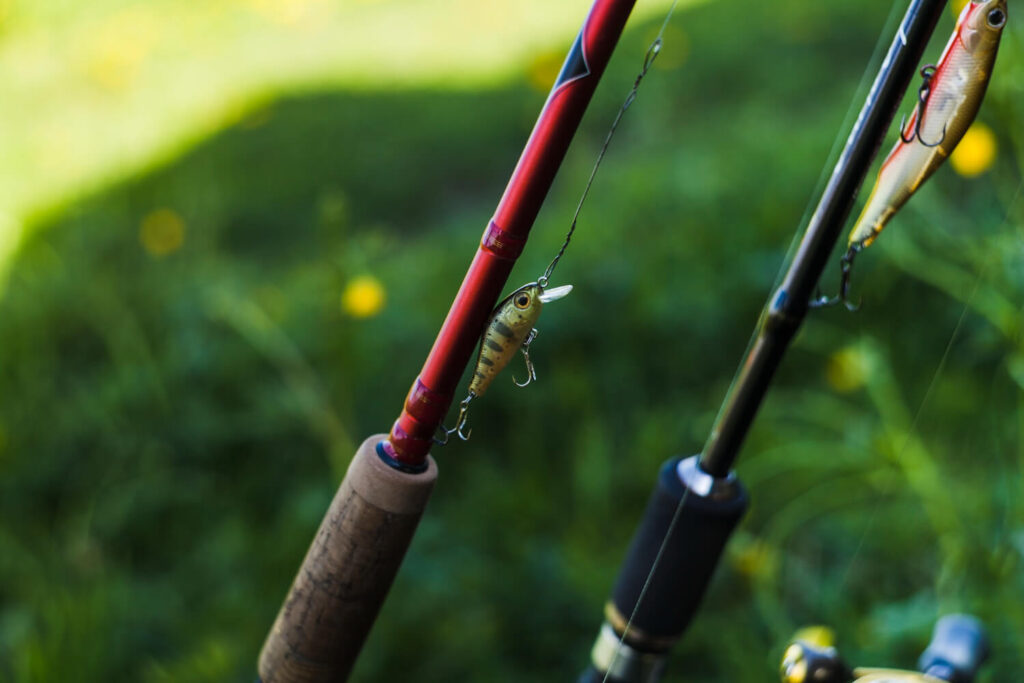
A fishing rod does much more than hold a reel and fishing line. It influences how accurately you cast, how naturally a lure moves through the water, how quickly you detect subtle bites, and how effectively you fight fish once they’re hooked.
Even the highest-quality reel can’t compensate for a rod that doesn’t match the target species, fishing technique, or conditions.
Modern fishing rods are available in hundreds of combinations of length, power, action, and construction. Some are designed for throwing tiny trout lures into mountain streams, while others are built to battle offshore species that weigh hundreds of pounds.
Materials have evolved from traditional fiberglass to lightweight graphite and advanced carbon fiber composites, making today’s rods lighter, stronger, and more specialized than ever before.
The variety can feel overwhelming, especially when terms such as medium-heavy power, fast action, high-modulus graphite, lure rating, or Fuji guides begin appearing on product pages and reviews.
Understanding what these specifications actually mean makes shopping far easier and helps prevent buying a rod that doesn’t fit your fishing style.
Key Takeaways
- Understand the five core rod specifications: length, power, action, line rating, and lure rating. They determine how a rod casts, handles fish, and performs with different techniques.
- Match your fishing rod to your target species, preferred techniques, and fishing environment instead of choosing solely by brand or price.
- Select rod materials based on your priorities: graphite for sensitivity, fiberglass for durability, and composite construction for a balance of both.
- Pair your rod with the appropriate reel, fishing line, and lure weight to create a balanced setup that maximizes casting performance and hook-up success.
- Protect your investment by cleaning, inspecting, and storing your rod properly to extend its lifespan and maintain peak performance.
Fishing Rod Anatomy: Parts, Components, and Their Functions
Every fishing rod shares the same basic components, yet small differences in materials and construction dramatically affect performance.
Before comparing rod lengths, actions, and power ratings, it’s helpful to understand what each part does and why manufacturers invest so much engineering into these seemingly simple pieces.
Rod Blank
The blank is the backbone of every fishing rod. It’s the long tapered shaft that bends under pressure and stores energy during a cast.
Nearly every performance characteristic, including sensitivity, strength, weight, casting distance, and durability, begins with the blank.
Graphite Blanks
Graphite remains one of the most common materials used in modern freshwater fishing rods because it’s exceptionally light and sensitive.
Graphite transfers vibration extremely well, allowing anglers to detect light bites, subtle bottom composition changes, and lure movement through vegetation or rocks.
Bass anglers often favor graphite rods when fishing Texas rigs, jigs, and finesse presentations because even slight pressure can be felt through the blank.
High-performance graphite rods also recover quickly after each cast, improving casting accuracy and helping anglers maintain precise lure control.
The tradeoff is durability. While modern graphite construction is much stronger than earlier generations, graphite is generally less impact-resistant than fiberglass.
Dropping a rod on rocks or striking it against a boat gunwale can damage the blank even when visible cracks aren’t immediately apparent.
Carbon Fiber Construction
Many manufacturers advertise carbon fiber construction instead of graphite. In reality, graphite is a form of carbon, and the terms are often used interchangeably in the fishing industry.
Premium rods typically incorporate advanced carbon fiber layups that improve stiffness while reducing overall weight.
Better manufacturing techniques allow companies to build thinner blanks without sacrificing strength. The result is a rod that feels lighter in hand during long fishing sessions while providing greater sensitivity and faster response.
Fiberglass Blanks
Fiberglass has been a trusted rod material for decades and continues to excel in applications where flexibility and toughness matter more than maximum sensitivity.
Fiberglass blanks bend deeper throughout the rod, creating a slower action that keeps constant pressure on fish during the fight. This forgiving bend makes fiberglass particularly effective for crankbaits, treble-hook lures, trolling applications, and live bait presentations.
Because fiberglass absorbs shock extremely well, it also tolerates accidental impacts better than graphite.
Composite Blanks
Composite rods combine graphite and fiberglass within a single blank. Rather than forcing anglers to choose between sensitivity and durability, composite construction blends the strengths of both materials.
Many manufacturers use graphite in the upper portion of the rod to improve bite detection while incorporating fiberglass lower in the blank to create smoother loading during casting and additional strength under heavy pressure.
These rods have become increasingly popular among anglers who fish multiple techniques with one setup.
High-Modulus Graphite
Modulus measures the stiffness of graphite fibers.
Higher-modulus graphite produces lighter, more responsive fishing rods because less material is required to achieve the same strength. These rods often deliver exceptional sensitivity, making them favorites among tournament bass anglers and professionals.
However, extremely high-modulus blanks generally become less forgiving to impacts, requiring more careful handling than lower-modulus construction.
Sensitivity vs. Durability
Every rod balances two competing characteristics.
Highly sensitive graphite blanks make it easier to detect bites but often require more careful handling. Fiberglass sacrifices some sensitivity while providing outstanding toughness.
Composite construction occupies the middle ground, offering a balance that appeals to many recreational anglers.
The right choice depends less on which material is “better” and more on where, how, and what you fish.
Rod Handle
The handle serves as the primary connection between the angler and the rod.
Grip comfort becomes increasingly important during full-day fishing trips, especially when repeatedly casting heavy lures or fighting large fish.
Manufacturers generally use either cork or EVA foam, although handle designs vary significantly depending on rod style.
| Handle Type | Advantages | Best For |
| Cork | Sensitive, lightweight | Bass, trout |
| EVA Foam | Durable, weather resistant | Saltwater |
| Split Grip | Lighter, increased blank contact | Performance fishing |
| Full Grip | Comfort under heavy loads | Surf, trolling |
Cork Handles
Natural cork has remained popular for generations because it’s lightweight, comfortable, and highly sensitive.
Cork transmits vibration well, allowing anglers to feel subtle movements traveling through the blank.
Many premium bass, trout, and walleye rods continue to feature high-quality cork grips because they combine comfort with excellent feedback.
Well-maintained cork also ages gracefully, although it benefits from occasional cleaning to prevent dirt from accumulating in the pores.
EVA Foam Handles
EVA foam offers exceptional durability and weather resistance. Unlike cork, it resists water absorption and requires little maintenance.
Saltwater anglers frequently prefer EVA because it withstands repeated exposure to moisture, fish slime, sunscreen, and harsh environmental conditions.
Modern EVA handles are available in various densities, providing excellent grip even when wet.
Split Grip Designs
Split-grip handles remove material from the center of the rear handle, exposing part of the blank. This design reduces weight while increasing blank contact, allowing anglers to feel more vibration directly through their hands.
Split grips have become especially common on bass fishing rods and performance spinning rods.
Full Grip Designs
Full grips provide continuous handle coverage from the reel seat to the butt cap.
Many anglers find them more comfortable when making powerful casts or fighting larger fish because the additional contact area distributes pressure more evenly.
They’re commonly found on surf rods, trolling rods, catfish rods, and many saltwater models.
Rear Grip Length
Rear grip length influences casting mechanics.
Longer rear grips generate additional leverage for two-handed casting, making them ideal for surf fishing, swimbaits, and offshore applications.
Shorter rear grips improve maneuverability around docks, kayaks, and heavy shoreline vegetation while reducing interference during one-handed casts.
Comfort should never be overlooked. Even the lightest rod becomes tiring if the handle doesn’t fit naturally in your hand after hundreds of casts.
Reel Seat
The reel seat securely attaches the reel to the fishing rod while maintaining proper alignment between the reel, guides, and blank.
A quality reel seat prevents movement under load and ensures efficient power transfer during hooksets.
| Type | Advantages | Best Use |
| Graphite | Lightweight | Freshwater |
| Aluminum | Strong | Offshore |
Graphite Reel Seats
Graphite reel seats are lightweight and corrosion-resistant. Because they reduce overall rod weight, they’re commonly used on freshwater spinning rods, bass rods, and finesse applications where sensitivity is a priority.
Aluminum Reel Seats
Aluminum reel seats provide exceptional strength. They’re commonly found on heavy-duty saltwater rods, offshore trolling rods, and big-game equipment where extreme drag pressures require maximum durability.
Many aluminum seats include corrosion-resistant finishes designed for harsh marine environments.
Locking Mechanisms
Most reel seats use threaded locking nuts that tighten against the reel foot.
Premium designs incorporate dual locking rings or recessed threads that minimize loosening during extended fishing sessions.
A properly secured spinning reel or baitcasting reel maintains balance and prevents unwanted movement while fighting fish.
Even slight reel movement can reduce sensitivity, compromise hooksets, and become uncomfortable during prolonged use.
Line Guides and Inserts
Line guides control how fishing line travels from the reel to the tip of the rod. Guide quality influences casting distance, friction, heat buildup, and overall durability.
Fuji Guides
Fuji remains one of the most recognized names in rod components. Many premium manufacturers equip rods with Fuji guides because of their precise construction, smooth inserts, and long-term durability.
Although other quality guide manufacturers exist, Fuji components are widely respected among professional anglers.
Stainless Steel Guides
Guide frames are commonly manufactured from stainless steel. Stainless steel provides excellent corrosion resistance while maintaining the strength necessary to withstand repeated casting and heavy fish.
Saltwater rods often feature upgraded stainless alloys or protective coatings that better resist exposure to salt.
Guide Inserts
Inside each guide sits a smooth insert that reduces friction as fishing line passes through.
Guide inserts protect braided, fluorocarbon, and monofilament lines from excessive wear while improving casting efficiency.
| Insert Material | Relative Cost | Best Used For |
| Aluminum Oxide | Budget | Casual monofilament/fluorocarbon use. Can groove over time under heavy braided line. |
| Alconite | Mid-Tier | Excellent all-rounder. Light, smooth, and handles braided line perfectly without wearing down. |
| SiC / Torzite | Premium | Extreme heat dissipation, razor-thin, ultra-lightweight. Found on high-end tournament gear. |
Ceramic Inserts
Ceramic inserts are particularly effective because they dissipate heat generated during casting and fish fights.
Lower friction allows the line to move more smoothly through the guides, improving casting performance while reducing long-term line damage.
Tip-Top Guide
The tip-top guide experiences the greatest movement during casting and fish fights.
Because every inch of line exits through this guide, it must remain smooth and free of cracks.
A damaged tip insert can quickly fray braided line or weaken monofilament, eventually causing break-offs during critical moments.
Hook Keeper and Butt Cap
Although small, these components improve convenience and rod longevity.
A hook keeper provides a secure place to store hooks and lures between casts or while moving between fishing spots. Using the hook keeper instead of attaching hooks to guides helps prevent guide damage and reduces unnecessary stress on the fishing line.
The butt cap protects the end of the rod from impacts while improving leverage during long fights. Larger butt caps are especially useful during boat fishing, where anglers often brace the rod against their body while applying heavy pressure to powerful fish.
Many offshore rods incorporate reinforced butt caps or gimbal designs that fit securely into fighting belts or rod holders, making extended battles with large saltwater species significantly more manageable.
| Bottom line: Every rod component affects performance, but the blank, guides, and handle have the greatest influence on sensitivity and durability. |
Understanding Fishing Rod Specifications
Every fishing rod includes a series of specifications printed directly on the blank. These markings provide far more useful information than the product name alone.
Length, power, action, line rating, and lure rating determine how the rod performs on the water and whether it matches your preferred fishing techniques.
Quick Answer: Choose rod specifications based on the fish and technique:
| Specification | Quick Rule |
| Length | Longer = farther casts |
| Power | Match fish size |
| Action | Match lure type |
| Line Rating | Stay within printed range |
| Lure Rating | Cast within recommended weight |
Rod Length
Rod length affects casting distance, leverage, accuracy, lure control, and fish-fighting ability.
While personal preference plays a role, each length range offers distinct advantages depending on where and how you fish.
Short rods, generally under 6 feet 6 inches, prioritize precision over distance. They excel when casting in tight quarters, around overhanging trees, beneath docks, or from kayaks where space is limited.
Their compact design also provides excellent control when targeting small trout streams or panfish.
Medium-length rods, typically between 6 feet 6 inches and 7 feet 3 inches, offer the greatest versatility.
They balance casting distance with accuracy, making them a favorite among bass anglers, walleye fishermen, and anyone who wants a single rod capable of handling a wide range of techniques.
Long rods, exceeding 7 feet 3 inches, maximize casting distance and leverage.
Surf anglers, inshore fishermen, and offshore specialists often rely on longer rods to launch heavy rigs farther from shore or maintain better line control when fighting powerful fish.
| Rod Length | Best For | Advantages |
| Under 6’6″ | Trout streams, kayak fishing, dock fishing | Excellent accuracy, easy handling in tight spaces |
| 6’6″–7’3″ | Bass, walleye, crappie, all-around fishing | Balanced casting distance and versatility |
| Over 7’3″ | Surf fishing, swimbaits, offshore, flipping | Longer casts, greater leverage, improved line control |
Rod Power
Power refers to the amount of force required to bend a fishing rod. It indicates the rod’s lifting strength rather than how quickly it bends.
Manufacturers typically label rods from ultralight to extra heavy, with each rating designed for specific lure sizes, fishing line strengths, and target species.
Selecting the appropriate power improves casting performance, increases hook-setting efficiency, and prevents unnecessary stress on the blank.
A rod that’s too light may struggle to cast heavier lures or control larger fish, while one that’s too heavy can reduce casting accuracy and make small fish difficult to detect.
Ultralight
Ultralight rods bend easily under minimal pressure and are designed for the smallest freshwater species. They pair well with lightweight monofilament or fluorocarbon line and tiny jigs, spoons, inline spinners, and soft plastics.
Trout, bluegill, crappie, and other panfish are common targets for ultralight tackle because the flexible blank protects light line while making even modest fish enjoyable to catch.
Light
Light-power rods offer slightly more backbone while maintaining excellent sensitivity. They remain suitable for smaller fish but provide additional casting distance and better control when using slightly heavier lures.
Many anglers choose light-power spinning rods for stocked trout, perch, crappie, and finesse bass fishing in clear water.
Medium Light
Medium-light rods bridge the gap between finesse and all-around freshwater fishing. They perform exceptionally well with drop shots, Ned rigs, small swimbaits, and lightweight live bait presentations.
Their versatility makes them popular among anglers targeting multiple species during the same trip.
Medium
Medium-power rods represent one of the most versatile options available. They cast a broad range of lure weights while providing enough strength for bass, walleye, larger trout, and many inshore species.
For anglers purchasing their first fishing rod, a medium-power spinning rod often offers the greatest flexibility across different techniques.
Medium Heavy
Medium-heavy power has become the standard recommendation for bass fishing because it balances sensitivity with pulling strength.
This power rating performs well with Texas rigs, spinnerbaits, jigs, chatterbaits, buzzbaits, frogs in moderate vegetation, and many soft plastic presentations.
It also provides enough backbone to drive single hooks through thick plastic baits while maintaining casting accuracy.
Many experienced anglers consider a medium-heavy fast-action rod the best all-around bass setup.
Heavy
Heavy-power rods are designed for larger fish and heavy cover. Thick vegetation, timber, docks, and dense grass require additional lifting power to keep hooked fish from burying themselves in cover.
Heavy rods are commonly paired with braided fishing line and baitcasting reels when targeting largemouth bass, pike, musky, catfish, and many saltwater species.
Common Mistake: Buying a heavy-power rod as your first rod often reduces casting accuracy with everyday lures.
Extra Heavy
Extra-heavy rods are purpose-built for maximum power. They excel when throwing oversized swimbaits, punching thick vegetation, targeting giant catfish, or battling offshore game fish where extreme drag pressure is common.
Although they sacrifice finesse, their enormous backbone allows anglers to control fish that would overpower lighter equipment.
| Power | Common Fish Species | Typical Lures |
| Ultralight | Trout, bluegill, crappie | Small jigs, inline spinners, micro spoons |
| Light | Trout, perch, crappie | Small crankbaits, soft plastics, live bait |
| Medium Light | Bass, walleye, trout | Ned rigs, drop shots, finesse worms |
| Medium | Bass, walleye, redfish | Spinnerbaits, jerkbaits, crankbaits |
| Medium Heavy | Bass, pike, redfish | Texas rigs, jigs, chatterbaits, frogs |
| Heavy | Bass, catfish, musky | Punch rigs, swimbaits, large jigs |
| Extra Heavy | Giant catfish, tuna, offshore species | Oversized swimbaits, heavy live bait rigs |
Rod Action
While power describes how much force bends the rod, action describes where the rod bends.
Action affects casting accuracy, lure presentation, hook-setting speed, and fish-fighting characteristics.
Extra Fast Action
Extra-fast rods bend only within the upper few inches of the blank. Nearly all of the rod remains rigid, producing immediate power transfer during hooksets.
This design maximizes sensitivity and allows anglers to detect even subtle bites.
Extra-fast rods are popular for worm fishing, jigs, flipping, pitching, and other single-hook presentations that demand instant hook penetration.
Fast Action
Fast-action rods bend primarily in the upper third of the blank. They remain among the most versatile rod actions because they combine excellent sensitivity with enough flex to cast efficiently.
Many spinning rods and baitcasting rods designed for bass fishing feature fast actions because they perform well across a wide variety of techniques.
Moderate Fast Action
Moderate-fast rods provide a smoother transition between tip flexibility and backbone. They cast moving baits exceptionally well while still delivering relatively quick hooksets.
Spinnerbaits, chatterbaits, swim jigs, and vibrating lures perform great on moderate-fast rods.
Moderate Action
Moderate-action rods bend through much of the blank. Rather than instantly pulling against the fish, they absorb sudden surges and maintain constant pressure.
Treble-hook lures such as crankbaits and jerkbaits benefit from this forgiving action because fish are less likely to tear free during aggressive head shakes.
Slow Action
Slow-action rods bend nearly the entire length of the blank.
Although uncommon in modern bass fishing, they remain useful for live bait fishing, ultralight trout applications, and certain traditional techniques where soft hooksets and maximum flexibility are beneficial.
The deeper bend also protects light fishing line from sudden break-offs.
| Rod Action | Best Technique | Hookset Speed |
| Extra Fast | Texas rigs, jigs, flipping | Very Fast |
| Fast | Spinnerbaits, worms, general bass fishing | Fast |
| Moderate Fast | Chatterbaits, swim jigs | Medium-Fast |
| Moderate | Crankbaits, jerkbaits, treble hooks | Moderate |
| Slow | Live bait, ultralight fishing | Slow |
A simple way to visualize rod action is to imagine where the blank begins to bend.
Extra Fast
──────────╮ (Bends only at the top 10-15%)
Fast
────────╮(Bends at the top 25-30%)
Moderate
─────╮(Bends down to the middle/halfway)
Slow
───╮(Parabolic bend all the way to the handle)
The lower the bend starts, the slower the action. Faster actions leave more backbone available for powerful hooksets, while slower actions load deeper into the blank for smoother casting and improved fish retention.
Good to Know: Rod action affects hooksets far more than rod power.
Line Rating
Every fishing rod includes a recommended line rating printed directly on the blank. This specification indicates the line strength that the rod was designed to handle safely and efficiently.
Using line within the recommended range allows the blank to flex properly during casting and while fighting fish. Exceeding the maximum line rating can overstress the rod, while using line far below the minimum rating increases the likelihood of break-offs.
A rod rated for 8–15-pound test is engineered to perform best within that range. Pairing it with appropriately sized fishing line helps maintain casting distance, protects the blank from excessive stress, and allows the rod’s action to perform as intended.
The line rating should always be considered alongside lure weight and rod power rather than in isolation.
Monofilament
Monofilament remains one of the most forgiving fishing lines available. Its natural stretch helps absorb sudden impacts during hooksets and fish fights, making it a good choice for beginners.
Monofilament also floats, making it useful for topwater lures and live bait presentations.
Fluorocarbon
Fluorocarbon sinks more readily than monofilament and is less visible underwater.
Its increased sensitivity makes it popular for bottom-contact techniques such as Texas rigs, jigs, and shaky heads.
Because fluorocarbon stretches less than monofilament, anglers can detect subtle bites more easily.
Braided Line
Braided fishing line offers the highest strength-to-diameter ratio. With almost no stretch, braid delivers exceptional sensitivity and immediate hooksets.
It also cuts through vegetation more effectively than other line types, making it a favorite for heavy-cover bass fishing.
However, braid often requires a fluorocarbon or monofilament leader when fishing clear water because of its visibility.
| Line Type | Strengths | Best Uses |
| Monofilament | Stretch, forgiving | Beginners |
| Fluorocarbon | Invisible, sensitive | Bottom fishing |
| Braid | No stretch | Heavy cover |
Lure Rating
Lure rating specifies the range of lure weights a fishing rod can cast effectively.
Unlike rod power, which describes lifting strength, lure rating focuses on casting efficiency. Every blank is designed to load or flex within a certain weight range. Staying inside that range improves casting distance, accuracy, and overall rod performance.
For example, a rod rated for 1/4 to 3/4 ounce performs best with lures that fall within those limits. A lure that’s too light may not load the blank enough to generate casting distance, forcing the angler to use excessive effort while sacrificing accuracy.
Conversely, a lure that exceeds the maximum rating places unnecessary stress on the blank. Repeatedly casting oversized swimbaits, sinkers, or heavy rigs with an undersized rod can permanently weaken the carbon fiber construction or even cause the blank to fail under load.
Lure ratings become especially important when fishing techniques rely on precise casting.
Bass anglers throwing spinnerbaits, crankbaits, chatterbaits, Texas rigs, or jigs often notice significant improvements in casting performance when the lure closely matches the rod’s recommended range.
Although experienced anglers occasionally exceed published lure ratings for specialized techniques, doing so should be the exception rather than the rule.
Matching lure weight, fishing line, reel, and rod specifications creates a balanced setup that casts farther, feels more responsive, and places less stress on every component of the tackle system.
| Bottom line: Matching length, power, action, and lure rating to your fishing style matters more than buying the most expensive rod. |
Types of Fishing Rods
Fishing rods have become increasingly specialized as techniques have evolved.
While many rods can handle multiple applications, each major rod type is engineered around a specific reel design, casting style, or fishing environment.
| Rod Type | Best For |
| Spinning | Beginners |
| Casting | Bass |
| Fly | Fly fishing |
| Surf | Beach fishing |
| Trolling | Boats |
| Jigging | Offshore |
| Ice | Winter fishing |
| Travel | Airline travel |
Spinning Rods
Spinning rods remain the most versatile and beginner-friendly option on the market. Their straightforward design, compatibility with open-face spinning reels, and ability to cast lightweight lures make them a favorite among anglers of every skill level.
Unlike baitcasting equipment, spinning reels release line freely from a fixed spool, greatly reducing the likelihood of backlashes.
This forgiving design allows new anglers to focus on casting accuracy, lure presentation, and fish-fighting techniques rather than constantly managing the reel.
Spinning rods excel with finesse presentations and lighter tackle. They cast small soft plastics, inline spinners, spoons, jerkbaits, finesse worms, and live bait with minimal effort while maintaining excellent sensitivity for detecting subtle bites.
Their versatility also makes them effective across a wide range of freshwater species. Bass anglers frequently rely on spinning rods for drop-shot rigs, shaky heads, Ned rigs, and wacky worms.
Trout fishermen appreciate their ability to cast lightweight lures into rivers and streams, while crappie and walleye anglers benefit from the rod’s precision and responsiveness.
For anglers purchasing their first rod, a medium-power, fast-action spinning rod paired with a quality spinning reel remains one of the most practical combinations available.
It provides enough versatility to fish ponds, lakes, rivers, and even light inshore saltwater without requiring multiple specialized setups.
Casting Rods
Casting rods are designed to work with baitcasting reels, which sit on top of the rod rather than beneath it like spinning reels.
This configuration provides greater control over lure placement, increased cranking power, and improved efficiency when fishing heavier lures or targeting fish in dense cover.
One of the defining features of a casting rod is the trigger grip located beneath the reel seat. This small extension helps anglers maintain a secure grip during repeated casting while providing additional leverage when setting the hook or fighting larger fish.
Because the spool rotates during the cast, baitcasting reels require more thumb control than spinning reels.
While they have a steeper learning curve, experienced anglers often prefer them for their casting precision and ability to handle heavier fishing line and larger lures.
Casting rods are commonly paired with medium-heavy or heavy power blanks and fast or extra-fast actions.
These combinations generate the backbone needed to drive single hooks through thick soft plastics and quickly pull fish away from vegetation, timber, docks, or submerged brush.
Although many anglers associate casting rods exclusively with bass fishing, they’re equally effective for pike, musky, striped bass, redfish, snook, and numerous inshore saltwater species where larger lures and stronger tackle are required.
Fly Rods
Fly rods differ significantly from conventional fishing rods because they cast the weight of the fly line rather than the fly itself.
Instead of using heavier lures to load the blank, fly anglers generate casting energy by repeatedly accelerating and unrolling specialized fly line through the air.
This technique allows nearly weightless flies to reach fish that feed on insects, baitfish, shrimp, or other natural forage.
Fly rods are matched using a weight system rather than traditional power ratings. Common freshwater rods range from 3-weight to 8-weight, while heavier 9- to 12-weight models are designed for saltwater species.
| Fly Rod Weight Category | Best Target Species | Common Fishing Environments |
| Lighter Fly Rods | Small trout, bluegill, panfish | Small mountain streams, creeks, small rivers, ponds |
| Mid-Weight Fly Rods | Larger trout, smallmouth bass, largemouth bass, carp | Rivers, lakes, reservoirs, and larger streams |
| Heavy Fly Rods | Redfish, bonefish, striped bass, tarpon, salmon, offshore species | Saltwater flats, estuaries, coastal waters, offshore environments |
Because fly fishing often involves repeated false casting throughout the day, premium carbon fiber construction helps reduce fatigue while maintaining excellent recovery speed and casting accuracy.
Freshwater fly rods typically emphasize finesse and delicate presentations, whereas saltwater fly rods incorporate corrosion-resistant reel seats, stainless steel guides, and durable finishes capable of withstanding harsh marine environments.
Surf Rods
Surf rods are among the longest fishing rods available, with most measuring between 9 and 15 feet.
Their primary purpose is maximizing casting distance from beaches, jetties, and rocky shorelines where fish often feed beyond the breaking waves.
The additional length generates greater leverage during two-handed casts while also keeping more fishing line above crashing surf, improving line control and bite detection.
Surf rods are built to maximize casting distance and withstand the demanding conditions of saltwater fishing.
Most feature long rear grips that provide additional leverage for two-handed casts, along with reinforced reel seats and large corrosion-resistant guides that handle heavy fishing line and repeated exposure to saltwater.
Stainless steel or aluminum components improve durability, while the powerful butt section gives anglers the leverage needed to fight larger fish from the shoreline.
These rods are typically paired with large spinning reels that hold generous amounts of monofilament or braided fishing line, allowing for long casts and extended runs from powerful fish.
Depending on the coastline and local fishery, surf rods are commonly used to target species such as redfish, striped bass, bluefish, pompano, drum, sharks, and a variety of other saltwater game fish.
Trolling Rods
Unlike rods designed for repeated casting, trolling rods are engineered to pull lures or live bait behind a moving boat.
The rod spends much of its time secured inside a rod holder while maintaining constant pressure on the lure and absorbing strikes from fish traveling at speed.
Trolling rods feature powerful lower sections that withstand prolonged pressure without excessive fatigue. Many also include roller guides or oversized heavy-duty guides that reduce friction when using large-diameter fishing line under substantial drag pressure.
Offshore trolling rods are designed to handle specialized equipment and larger game fish in open water.
They’re commonly used with downriggers, planer boards, diving plugs, large skirted trolling lures, and natural bait rigs that are pulled behind a moving boat to cover large areas efficiently.
Their powerful construction helps manage the constant pressure created by these presentations while providing the strength needed to battle fast, hard-fighting species.
Offshore trolling is a proven technique for targeting pelagic fish such as tuna, mahi-mahi, wahoo, king mackerel, sailfish, and marlin.
Although freshwater anglers also troll for salmon, walleye, and lake trout, offshore trolling rods generally require heavier construction and corrosion-resistant hardware capable of surviving repeated saltwater exposure.
Jigging Rods
Jigging rods are designed for vertically working metal jigs through the water column.
Rather than making long casts, anglers repeatedly lift and lower the rod to create erratic lure movement that imitates injured baitfish.
Modern jigging rods generally fall into two categories.
Slow Pitch Jigging
Slow pitch rods feature highly responsive tips and progressively bending blanks that allow lightweight metal jigs to flutter naturally during their descent.
The rod itself generates much of the lure’s action, making these rods surprisingly flexible despite their lifting power.
Slow pitch jigging is particularly effective for bottom-oriented and reef-dwelling species that often strike a fluttering jig on the fall.
The technique is widely used to target snapper, grouper, amberjack, and a variety of reef fish, as the rod’s flexible blank imparts a natural, erratic action that closely imitates an injured baitfish.
This presentation is especially productive around reefs, wrecks, and other offshore structures where predatory fish ambush their prey.
Speed Jigging
Speed jigging rods are built with stiffer, more powerful blanks that allow anglers to work heavier metal jigs aggressively through the water column.
Instead of relying on the lure’s natural flutter, this technique uses rapid upward lifts to create fast, erratic movements that trigger reaction strikes from aggressive predators.
Speed jigging is commonly used to target powerful pelagic species such as tuna, yellowtail, kingfish, amberjack, and other large offshore game fish.
Although these rods are designed to generate significant lifting power, many remain surprisingly lightweight thanks to modern graphite and carbon fiber construction, helping reduce fatigue during the repetitive motions that speed jigging requires.
Ice Fishing Rods
Ice fishing rods are significantly shorter than conventional fishing rods because anglers fish directly beneath a hole drilled through the ice.
Most range between 24 and 42 inches in length, providing excellent control in confined shelters while maintaining exceptional sensitivity.
Since fish often bite very lightly during cold-water conditions, many ice rods feature ultra-sensitive tips that clearly transmit subtle movements.
Different power ratings accommodate various species.
| Ice Rod Power | Best Target Species | Typical Use |
| Ultralight | Bluegill, crappie, perch | Detecting light bites with small jigs and finesse presentations |
| Medium | Walleye | Jigging and fishing larger live bait or spoons |
| Heavy | Northern pike, lake trout | Fighting larger fish with heavier lures and stronger fishing line |
Because anglers spend long periods holding the rod, lightweight construction greatly reduces fatigue while improving bite detection.
Many modern ice rods also include bright tip sections that make even the slightest movement visible in low-light winter conditions.
Telescopic Fishing Rods
Telescopic fishing rods collapse into compact sections that slide inside one another for convenient transport.
Their space-saving design makes them popular among travelers, hikers, campers, and anyone with limited storage space.
Modern telescopic rods have improved dramatically over the past decade. Better carbon fiber construction and stronger locking mechanisms now provide performance much closer to traditional rods than earlier designs.
While telescopic rods may not match the sensitivity of premium one-piece graphite rods, they provide an excellent option when portability is the highest priority.
Travel Fishing Rods
Travel rods address a different need than telescopic rods.
Instead of collapsing, they separate into multiple sections, typically two, three, four, or even five pieces, that assemble into a full-length fishing rod.
Advances in ferrule design have dramatically improved multi-piece rod performance. Quality travel rods now exhibit flex patterns remarkably similar to comparable one-piece models while remaining compact enough for airline travel.
Manufacturers often include durable carry cases or rod tubes that protect the blank during transport.
Premium travel rods are available across nearly every fishing style, including spinning, casting, fly, and saltwater models.
| Quick Recommendation: If you’re unsure which rod to buy, start with a 7-foot medium spinning rod before investing in specialized setups. |
Choosing a Rod by Fish Species
Although rod specifications provide valuable technical information, most anglers ultimately choose equipment based on the fish they intend to catch.
Different species behave differently once hooked, feed in different environments, and require specific lure sizes and presentations.
| Species | Recommended Rod |
| Bass | Medium Heavy Casting |
| Trout | Ultralight Spinning |
| Walleye | Medium Light Spinning |
| Catfish | Heavy Casting |
| Redfish | Medium Heavy Spinning |
Bass Fishing Rods
Bass fishing demands more versatility than almost any other freshwater pursuit. A single day may involve flipping heavy vegetation in the morning, working crankbaits along offshore points in the afternoon, and skipping soft plastics beneath docks before sunset.
Because of that versatility, many anglers consider a 7-foot medium-heavy fast-action casting rod the best all-around bass setup.
This combination is versatile enough to handle many of the most popular bass fishing techniques, including Texas rigs, jigs, spinnerbaits, chatterbaits, buzzbaits, soft swimbaits, and weightless stick worms.
Its balance of casting accuracy, sensitivity, and hook-setting power makes it a reliable choice for anglers who regularly switch between different lure styles and fishing conditions.
Heavy-power rods become valuable when throwing frogs across matted vegetation or punching through thick grass, while moderate-action rods shine with crankbaits by helping keep treble hooks pinned during the fight.
Many bass anglers eventually build a collection of specialized rods, but a medium-heavy fast-action model remains the foundation of most bass tackle arsenals.
Trout Rods
Trout often feed on small insects, minnows, and other delicate forage, making finesse one of the most important aspects of trout fishing.
Lightweight tackle allows anglers to cast tiny lures naturally while protecting light fishing line during the fight.
An ultralight or light-power spinning rod with a fast action is the preferred choice for most trout anglers. The responsive tip casts small inline spinners, spoons, micro crankbaits, and soft plastics with ease while providing enough sensitivity to detect subtle strikes in moving water.
Rod length depends largely on the fishing environment. Shorter rods around 5½ to 6½ feet excel on narrow creeks where overhanging branches limit casting space, while rods between 6½ and 7 feet provide longer casts across lakes, larger rivers, and reservoirs.
Because trout often make sudden runs after being hooked, a lighter rod cushions those surges and helps prevent fine monofilament or fluorocarbon leaders from breaking.
Crappie Rods
Crappie fishing emphasizes lure control and precise presentations rather than raw power. These fish commonly suspend around brush piles, standing timber, docks, and submerged vegetation, where carefully presenting small jigs or minnows often produces the best results.
Most crappie anglers favor light or ultralight rods paired with spinning reels.
Longer rods ranging from 8 to 12 feet are popular for vertical jigging and “spider rigging,” allowing anglers to reach structure without moving the boat directly over the fish.
Shorter rods between 6 and 7 feet remain excellent all-around choices for casting lightweight jigs beneath docks or along shoreline cover.
The softer blank also helps keep thin-wire hooks from tearing free during the fight, an important consideration because crappie have relatively delicate mouths.
Catfish Rods
Catfish place tremendous stress on fishing equipment. Large blue catfish and flathead catfish are capable of making long, powerful runs while using current, submerged timber, or other structure to their advantage.
Medium-heavy, heavy, and extra-heavy rods dominate catfish fishing because they generate the lifting power needed to control larger fish while casting heavy sinkers and substantial live or cut bait rigs.
Longer rods between 7 and 8 feet improve casting distance from shore and provide additional leverage during extended fights.
Most catfish anglers pair these rods with durable conventional or baitcasting reels spooled with heavy monofilament or braided fishing line.
Circle hooks are also widely used because they improve hook-up consistency while reducing deep hooking, especially when fishing live bait or cut bait.
Fiberglass and composite blanks remain especially popular in catfish fishing because they withstand heavy loads exceptionally well and tolerate abuse better than many high-modulus graphite rods.
Walleye Rods
Walleye are known for their subtle bites, making sensitivity one of the most important qualities in a rod.
Medium-light and medium-power spinning rods with fast actions excel for jigging, live bait rigs, and finesse presentations commonly used to target walleye in lakes and rivers.
The fast tip helps anglers detect gentle pickups that might otherwise go unnoticed, while the rod retains enough backbone to drive hooks home without overpowering the fish.
Rod lengths between 6½ and 7 feet are among the most versatile, providing an effective balance between casting accuracy and line control.
Many walleye anglers keep separate rods rigged for jigging and trolling, allowing them to adapt quickly as fish behavior changes throughout the day.
Redfish Rods
Redfish demand equipment capable of handling powerful runs while remaining sensitive enough to present lures accurately in shallow coastal environments.
Medium or medium-heavy spinning rods between 6½ and 7½ feet are among the most versatile choices for inshore fishing.
These rods cast soft plastics, spoons, paddle-tail swimbaits, topwater plugs, and live shrimp efficiently while providing enough strength to turn fish away from oyster beds, mangrove roots, and dock pilings.
Because redfish are typically pursued in saltwater, corrosion-resistant construction is essential. Stainless steel guides, anodized reel seats, and durable finishes help extend equipment life despite repeated exposure to salt spray.
Braided fishing line paired with a fluorocarbon leader remains one of the most common combinations for redfish because it provides excellent sensitivity while maintaining abrasion resistance around shell beds and structure.
Saltwater Fishing Rods
Saltwater fishing encompasses everything from casting artificials along grassy flats to battling tuna hundreds of miles offshore. As a result, rod selection varies considerably depending on the target species and environment.
Inshore rods generally prioritize casting accuracy and sensitivity. Medium and medium-heavy spinning rods dominate applications involving redfish, speckled trout, snook, flounder, and striped bass.
Offshore rods focus on lifting power and durability. Heavy and extra-heavy rods paired with conventional reels handle trolling, bottom fishing, jigging, and live bait presentations for larger pelagic species.
Regardless of the application, quality saltwater rods are built with components that can withstand harsh marine conditions.
They typically feature stainless steel or other corrosion-resistant guide frames, durable guide inserts that handle braided fishing line with minimal wear, and reel seats designed to resist rust and corrosion.
Protective finishes help shield the blank from salt exposure, while every major component is engineered to endure repeated use in saltwater without compromising performance or durability.
Regular freshwater rinsing after every trip significantly extends the life of these components and helps prevent corrosion from damaging guides, reel seats, and hardware.
| Bottom line: Start with the fish you target most often, then select the rod built specifically for that style of fishing. |
Choosing Rods for Different Fishing Techniques
Different fishing techniques place different demands on a rod.
Even when targeting the same species, changing from crankbaits to jigs or from live bait to swimbaits may call for an entirely different combination of power and action.
| Technique | Recommended Rod |
| Texas Rig | Medium Heavy Fast |
| Crankbait | Medium Moderate |
| Spinnerbait | Medium Heavy Moderate Fast |
| Jig | Medium Heavy Fast |
| Live Bait | Moderate Action |
Casting
General casting applications benefit from versatility. A medium or medium-heavy fast-action rod covers the broadest range of techniques, making it suitable for spinnerbaits, soft plastics, jerkbaits, topwater lures, and many everyday presentations.
Spinning rods excel when throwing lighter lures, while casting rods become advantageous as lure size and cover increase.
Flipping
Flipping is a close-range technique used to place lures precisely into heavy vegetation, flooded timber, reeds, docks, and other dense cover.
Because fish often strike immediately after the lure enters the water, anglers need substantial backbone to drive the hook through thick soft plastics and quickly pull fish away from cover.
Heavy or extra-heavy casting rods with fast or extra-fast actions are the standard choice.
Braided fishing line is commonly paired with these rods because its minimal stretch maximizes hook-setting power.
Pitching
Pitching resembles flipping but uses a slightly longer underhand presentation to quietly place lures around isolated targets.
Medium-heavy fast-action casting rods provide an excellent balance of accuracy and power. Their responsive tips allow smooth lure delivery while retaining enough strength to control bass around docks, brush piles, laydowns, and shoreline vegetation.
Texas rigs, compact jigs, and creature baits are among the most common lures used for pitching.
Crankbait Fishing
Crankbaits create constant vibration during retrieval and typically use treble hooks rather than single hooks.
Because treble hooks require steady pressure instead of aggressive hooksets, moderate or moderate-fast action rods generally outperform fast-action models.
Fiberglass and composite blanks are especially popular because they load deeply during the cast, launch crankbaits farther, and absorb violent head shakes that could otherwise pull treble hooks free.
Most crankbait rods fall within the medium or medium-heavy power range, depending on lure size.
Swimbaits
Swimbaits vary enormously in size, from compact paddle tails weighing less than half an ounce to oversized hard baits weighing several ounces.
Smaller swimbaits work well on medium-heavy rods, while large glide baits and oversized hard swimbaits require heavy or extra-heavy rods specifically designed to cast substantial weight without overstressing the blank.
Matching the lure rating becomes particularly important because oversized swimbaits can easily exceed the limits of standard bass rods.
Many dedicated swimbait anglers also prefer longer rods, which improve casting distance and help launch heavier lures more efficiently.
Jig Fishing
Jigs remain one of the most productive lures for targeting bass, walleye, and many saltwater species because they imitate crawfish, baitfish, and other bottom-dwelling forage.
Fishing a jig effectively often means detecting subtle bites before the fish has a chance to spit the lure.
A fast or extra-fast action rod provides the sensitivity needed to feel changes in bottom composition, vegetation, or light strikes.
Most bass anglers pair medium-heavy casting rods with fluorocarbon or braided fishing line when fishing football jigs, flipping jigs, swim jigs, or finesse jigs.
For lighter freshwater jigging applications, such as targeting walleye or perch, a medium-light or medium-power spinning rod offers excellent bite detection while maintaining enough flexibility to fight fish on lighter line.
Vertical jigging in deep water places different demands on the rod. Jigging rods are designed to work the lure with short upward movements while reducing fatigue during long sessions over offshore reefs or deep structure.
Live Bait Fishing
Live bait presentations place less emphasis on lure action and more importance on allowing natural movement.
Moderate or slow-action rods excel because they load smoothly, absorb sudden surges, and reduce the chance of pulling bait away from cautious fish before they commit.
Depending on the target species and fishing conditions, live bait rods can be paired with a variety of rigging systems. Slip floats are ideal for suspending bait at a precise depth, while bottom rigs and Carolina rigs are effective for presenting bait along the lake or riverbed.
Three-way rigs work well in moving water by keeping the bait near the bottom without excessive snagging, and split-shot rigs provide a natural presentation for lighter baits.
Many anglers also use circle hooks when fishing with live bait because they improve hook-up rates and reduce the likelihood of deep-hooking the fish.
Light and medium-power rods handle minnows, worms, and leeches for trout, walleye, and panfish, while heavy rods become necessary when presenting large live bait for catfish, striped bass, musky, or offshore predators.
Boat Fishing
Fishing from a boat allows anglers to position themselves directly over productive structure, reducing the need for extremely long casts.
As a result, rod selection often prioritizes lure control, fish-fighting leverage, and presentation accuracy rather than maximum casting distance.
Bass anglers commonly carry multiple rod-and-reel combinations on deck, each dedicated to a specific technique.
A typical setup may include separate rods for jigs, crankbaits, frogs, spinnerbaits, finesse worms, and topwater lures, allowing quick adjustments without constantly retying.
Offshore boats require heavier equipment designed for trolling, jigging, bottom fishing, or live bait presentations.
Many of these rods incorporate reinforced butt caps that fit securely into rod holders or fighting belts, providing better leverage when battling powerful saltwater species.
Bank Fishing
Bank anglers often face challenges that boat anglers can avoid, including shoreline vegetation, limited casting angles, and the need to cover large stretches of water on foot.
Versatility becomes especially important because carrying numerous rods while walking around a lake or river is often impractical.
A medium-power spinning rod between 6½ and 7 feet remains one of the most versatile options for bank fishing. It casts a wide variety of lures effectively while remaining manageable around trees, brush, and shoreline obstacles.
Those targeting bass from shore frequently choose a medium-heavy fast-action rod capable of handling spinnerbaits, soft plastics, chatterbaits, and topwater lures throughout the day.
For anglers who hike to remote fishing locations, lightweight travel rods and telescopic rods offer a convenient solution without sacrificing too much performance.
Fishing Rod Materials Compared
The material used to build a fishing rod influences nearly every aspect of its performance, including sensitivity, weight, durability, casting characteristics, and cost.
While manufacturers continue to refine blank construction through advanced carbon fiber technology and proprietary manufacturing processes, most modern rods fall into four primary material categories.
| Material | Sensitivity | Weight | Durability | Price | Best Uses |
| Graphite | Excellent | Very Light | Moderate | Moderate to High | Bass fishing, finesse techniques, jig fishing |
| Fiberglass | Moderate | Heavier | Excellent | Affordable | Crankbaits, trolling, live bait, catfish |
| Carbon Fiber | Outstanding | Extremely Light | Good | Premium | Tournament fishing, high-performance applications |
| Composite | Very Good | Moderate | Very Good | Moderate | Multi-purpose freshwater and saltwater fishing |
No single material is ideal for every angler. The best choice depends on fishing style, target species, preferred techniques, and budget.
Freshwater vs. Saltwater Fishing Rods
Freshwater and saltwater rods may appear similar at first glance, but they’re engineered for very different environments.
Freshwater equipment primarily focuses on casting performance, sensitivity, and lightweight construction because corrosion is rarely a major concern.
Saltwater rods, on the other hand, must withstand continuous exposure to salt, humidity, and abrasive marine conditions while maintaining enough strength to handle larger, harder-fighting fish.
Although some freshwater rods can occasionally be used in saltwater if they’re thoroughly rinsed afterward, repeated exposure without corrosion-resistant components significantly shortens their lifespan.
| Feature | Freshwater Rods | Saltwater Rods |
| Primary Environment | Lakes, ponds, rivers, streams | Bays, flats, beaches, offshore waters |
| Components | Standard guides and reel seats | Corrosion-resistant components |
| Guide Frames | Stainless steel or standard alloys | Marine-grade stainless steel or coated alloys |
| Reel Seats | Graphite or aluminum | Corrosion-resistant graphite or anodized aluminum |
| Blank Design | Lightweight and sensitive | Strength, lifting power, and durability |
| Typical Species | Bass, trout, crappie, walleye | Redfish, snook, tarpon, tuna, snapper |
One of the biggest differences lies in corrosion protection.
Saltwater quickly attacks exposed metal surfaces, particularly if equipment is stored without cleaning.
High-quality saltwater rods use stainless steel guide frames, corrosion-resistant reel seats, durable finishes, and guide inserts that tolerate braided fishing line under heavy loads.
Rod power also differs. While freshwater anglers commonly fish medium or medium-heavy rods, offshore saltwater applications frequently require heavy and extra-heavy models capable of handling substantial drag pressures and much larger fish.
Inshore fishing occupies the middle ground. Medium and medium-heavy spinning rods designed for redfish, speckled trout, snook, and flounder combine the casting characteristics of freshwater bass rods with saltwater-ready components that resist corrosion.
Regardless of where you fish, rinsing rods with fresh water after each saltwater trip, drying them thoroughly, and periodically inspecting guides and reel seats greatly extends their service life.
How to Choose the Right Fishing Rod
The best fishing rod isn’t necessarily the most expensive or the one with the latest technology. It’s the rod that matches your experience level, the waters you fish most often, the species you pursue, and the techniques you use regularly.
Rather than focusing on a single specification, consider how length, power, action, reel type, and construction work together as a complete system.
Experience Level
Beginner
New anglers benefit most from versatility and ease of use.
A medium-power, fast-action spinning rod between 6½ and 7 feet paired with a quality spinning reel provides an excellent introduction to freshwater fishing.
This setup handles a wide variety of lures, requires minimal maintenance, and greatly reduces frustration caused by baitcasting backlashes.
It also allows beginners to target bass, trout, crappie, walleye, and many panfish without immediately investing in multiple specialized rods.
Intermediate
As anglers gain confidence, they often begin targeting specific species or learning new techniques.
Adding a second rod, perhaps a medium-heavy casting rod for bass fishing or an ultralight spinning rod for trout, opens the door to more specialized presentations while expanding overall versatility.
Intermediate anglers also begin paying closer attention to rod action, lure ratings, and line selection, allowing them to build better-balanced setups for different conditions.
Advanced
Experienced anglers typically own several rods, each optimized for a particular technique.
Rather than relying on one versatile setup, they may dedicate individual rods to crankbaits, flipping, finesse worms, swimbaits, topwater lures, jig fishing, or offshore trolling.
Premium graphite and carbon fiber construction becomes more valuable at this level because increased sensitivity and reduced weight provide noticeable advantages during long days on the water.
Fishing Location
The waters you fish most often should have a major influence on rod selection.
A setup that performs exceptionally well from the deck of a bass boat may feel awkward on a narrow creek, while a surf rod designed to launch heavy sinkers hundreds of feet from shore would be impractical in a small pond.
Lake Fishing
Lakes offer tremendous variety, from shallow weed beds and rocky shorelines to open water and deep structure.
Because conditions can change quickly, versatility is often the most valuable characteristic.
A 6-foot 6-inch to 7-foot medium or medium-heavy rod handles the majority of lake fishing situations.
It performs well with spinnerbaits, crankbaits, soft plastics, jigs, jerkbaits, and topwater lures while providing enough power for bass, walleye, and other common freshwater species.
Anglers who frequently fish open water may prefer slightly longer rods for increased casting distance, while those targeting fish around docks and timber often prioritize accuracy over maximum range.
River Fishing
Fish frequently hold behind rocks, submerged logs, bridge pilings, and current seams where precise lure placement is more important than long casts.
Shorter rods provide better maneuverability around overhanging trees and narrow banks, while fast-action blanks improve bite detection in moving water.
Light and medium-power spinning rods remain excellent choices for trout, smallmouth bass, and walleye, whereas medium-heavy rods perform well when targeting larger river bass or catfish.
Boat Fishing
Fishing from a boat allows anglers to position themselves close to productive structure, reducing the need for extremely long casts.
Many boat anglers carry several rod-and-reel combinations rigged for different techniques so they can adapt quickly without changing lures or fishing line.
A typical bass boat may have dedicated rods for frogs, crankbaits, jigs, spinnerbaits, finesse worms, and swimbaits, each optimized for a specific presentation.
Since rods spend considerable time in lockers or rod holders, durable construction and protective rod sleeves help prevent accidental damage during transport.
Kayak Fishing
Limited space changes the way rods are used in a kayak.
Rod lengths between 6 and 7 feet are generally easier to manage while seated and reduce the likelihood of striking the water or nearby gear during the cast.
Shorter rear grips also improve comfort because they interfere less with life jackets and elevated kayak seats.
Medium and medium-heavy spinning rods dominate kayak fishing because they provide versatility while remaining easy to handle in confined spaces.
Many kayak anglers also favor one-piece rods for maximum sensitivity, although two-piece travel rods have become increasingly popular for transporting gear to remote launch sites.
Pier Fishing
Pier anglers often target a wide variety of species without knowing exactly what may bite next.
Longer spinning rods between 7 and 9 feet improve casting distance while helping keep fishing line clear of pilings, rocks, and other obstacles beneath the pier.
Depending on location, a medium-heavy rod capable of handling both artificial lures and natural bait offers the greatest flexibility.
Corrosion-resistant guides and reel seats become especially important on coastal piers where equipment is regularly exposed to salt spray.
Surf Fishing
Surf fishing demands specialized equipment built for distance and durability.
Long rods between 9 and 12 feet generate the leverage required for powerful two-handed casts that place bait beyond the breaking waves.
Heavy-power blanks paired with large spinning reels handle substantial sinkers, rough surf conditions, and powerful saltwater species.
Because rods are frequently exposed to blowing sand, saltwater, and harsh weather, stainless steel guides and corrosion-resistant reel seats are essential for long-term reliability.
Target Species
Matching a rod to the fish you pursue remains one of the simplest ways to improve performance on the water.
While many species overlap in the equipment they require, selecting the appropriate power and action makes casting more efficient and fighting fish considerably easier.
Bass
Bass anglers benefit from versatile equipment capable of handling numerous lure styles.
A medium-heavy fast-action casting rod remains the standard recommendation because it performs well with Texas rigs, spinnerbaits, chatterbaits, jigs, frogs, and soft plastics.
Anglers who regularly fish finesse techniques often add a medium spinning rod for lighter presentations.
Trout
Trout require finesse more than brute strength. Ultralight and light-power spinning rods cast small lures naturally while protecting light fishing line during sudden runs.
Fast actions improve sensitivity without sacrificing casting accuracy.
Catfish
Catfish demand considerably more lifting power. Medium-heavy, heavy, and extra-heavy rods paired with strong reels allow anglers to cast large sinkers and control powerful fish in current or around submerged timber.
Crappie
Light tackle dominates crappie fishing. Long light-power rods excel when vertical jigging around brush piles, while shorter spinning rods work well for casting small jigs beneath docks and shoreline cover.
Redfish
Redfish combine strength with speed, making medium and medium-heavy spinning rods ideal for inshore applications. Saltwater-ready components, braided fishing line, and corrosion-resistant guides ensure reliable performance around oyster beds, marsh grass, and shallow flats.
Lure Selection
The lures you fish most often should influence rod selection just as much as the species you target.
Every lure places different demands on the blank, and matching those demands improves both casting performance and hook-up percentages.
Soft Plastics
Soft plastics cover an enormous range of presentations, including Texas rigs, Carolina rigs, shaky heads, Ned rigs, and wacky worms.
Fast or extra-fast action rods excel because they transmit bottom contact clearly while providing the quick hooksets needed for single-hook lures.
Spinnerbaits
Spinnerbaits generate steady vibration throughout the retrieve. Medium-heavy fast or moderate-fast rods provide the ideal balance of sensitivity, casting distance, and fish-fighting control.
Jigs
Jigs require maximum sensitivity because many bites occur while the lure rests on the bottom. Medium-heavy fast-action rods paired with fluorocarbon or braided fishing line help anglers detect subtle strikes while delivering solid hook penetration.
Crankbaits
Crankbaits perform best on moderate-action rods. The deeper bend absorbs aggressive head shakes and helps keep treble hooks pinned throughout the fight.
Fiberglass and composite rods remain favorites for this technique because they load smoothly during casting.
Swimbaits
Small paddle-tail swimbaits can be fished effectively on medium-heavy rods, while oversized glide baits and hard swimbaits require specialized heavy or extra-heavy rods with appropriate lure ratings.
Using a rod designed for large swimbaits protects the blank while improving casting efficiency.
Live Bait
Live bait fishing emphasizes natural presentation rather than aggressive hooksets.
Moderate-action rods allow fish to take the bait more naturally while reducing the chance of pulling hooks free during the fight.
Depending on the target species, spinning or casting equipment may be equally effective.
Fishing Rod Brands Worth Considering
The fishing rod market includes dozens of reputable manufacturers, each offering products that appeal to different budgets, techniques, and experience levels.
Rather than searching for a single “best” brand, it’s often more useful to compare manufacturers based on the types of rods they build and the fishing styles they support.
| Brand | Best Known For |
| St. Croix | Premium sensitivity |
| Ugly Stik | Durability |
| Shimano | Versatility |
| Daiwa | Value |
| Penn | Saltwater |
| Abu Garcia | Bass fishing |
St. Croix
St. Croix has earned a strong reputation for premium rod construction, consistent quality control, and excellent sensitivity.
The St. Croix Triumph Series remains one of its most popular entry-level premium options, offering graphite blanks suitable for bass, walleye, trout, and general freshwater fishing.
Ugly Stik
Ugly Stik rods are known for durability. Their graphite and fiberglass composite construction makes them exceptionally forgiving for rugged environments.
The Ugly Stik GX2 continues to be one of the most widely recognized fishing rods because it balances affordability, toughness, and dependable performance.
Shimano
Shimano manufactures rods across virtually every category, from ultralight freshwater models to offshore saltwater equipment.
Their rods are often paired with Shimano reels, creating balanced combinations suitable for spinning, casting, jigging, and trolling applications.
Daiwa
Daiwa offers rods that cover nearly every price range.
The Daiwa Aird Series has become particularly popular among bass anglers seeking lightweight graphite construction without entering the premium price category.
Abu Garcia
Abu Garcia has long been associated with bass fishing, particularly baitcasting equipment.
The Abu Garcia Veritas Series emphasizes lightweight construction, fast actions, and excellent sensitivity for techniques such as jig fishing, Texas rigs, and spinnerbaits.
Penn
Penn remains one of the most recognizable names in saltwater fishing.
The company’s Battle Series rod-and-reel combinations are popular among anglers targeting inshore and nearshore species, offering durable construction designed to withstand demanding marine environments.
KastKing
KastKing has expanded rapidly by producing feature-rich rods at competitive prices.
The Perigee II Series is well known for offering multiple power and action options in both one-piece and two-piece configurations, making it a versatile choice for freshwater anglers.
Quantum
Quantum produces rods suited for bass fishing, walleye, and general freshwater applications.
Many of its models focus on dependable everyday performance while remaining accessible to recreational anglers.
Shakespeare
Shakespeare has introduced generations of anglers to fishing through affordable equipment. Its broad product lineup includes spinning, casting, youth, and travel rods suitable for beginners and families.
Berkley
Berkley combines rod manufacturing with extensive expertise in fishing line and artificial baits. The Lightning Rod Series continues to attract anglers seeking lightweight graphite performance at a moderate price point.
Cadence
Cadence has gained attention for lightweight carbon fiber construction, clean component design, and competitive pricing.
Its spinning and casting rods appeal to anglers looking for modern features without moving into the premium segment.
Best Fishing Rod Setups
A well-balanced setup pairs the rod, reel, fishing line, and lure selection so that each component complements the others.
Rather than focusing on a single specification, consider how the entire outfit performs together.
Best Beginner Setup
For someone purchasing their first fishing rod, versatility is more valuable than specialization.
A 6-foot 6-inch to 7-foot medium-power, fast-action spinning rod paired with a 2500- or 3000-size spinning reel handles an impressive range of freshwater fishing situations.
This combination casts lightweight and medium-weight lures comfortably, minimizes line management issues, and works well for bass, trout, crappie, walleye, and many other species.
Spool the reel with 8- to 10-pound monofilament or 10- to 15-pound braided fishing line with a fluorocarbon leader for a setup capable of handling ponds, lakes, rivers, and reservoirs.
Common lure choices include soft plastic worms, spinnerbaits, inline spinners, small crankbaits, jigs, and topwater poppers.
This setup offers enough flexibility to help new anglers discover which techniques they enjoy before investing in specialized equipment.
Best Bass Setup
Bass fishing covers a wide range of techniques, but if only one rod could be chosen, a medium-heavy fast-action casting rod remains the benchmark.
A 7-foot graphite rod paired with a low-profile baitcasting reel provides enough power for fishing around vegetation, timber, docks, and rocky structure while maintaining the sensitivity needed for bottom-contact presentations.
Many anglers spool this setup with 30- to 50-pound braided line or 12- to 17-pound fluorocarbon, depending on water clarity and cover.
This combination performs exceptionally well with Texas rigs, jigs, spinnerbaits, chatterbaits, buzzbaits, frogs, and soft swimbaits.
Many experienced bass anglers also carry a medium spinning rod for finesse techniques such as drop-shot rigs, Ned rigs, and wacky worms.
Best Trout Setup
Trout reward finesse, making lightweight equipment the preferred choice.
A 6-foot to 6-foot 6-inch ultralight or light-power spinning rod with a fast action casts small lures effortlessly while protecting light line during sudden runs.
Pair the rod with a 1000- or 2000-size spinning reel loaded with 4- to 6-pound monofilament or fluorocarbon.
This setup excels with inline spinners, small spoons, micro crankbaits, soft plastics, live worms, and salmon eggs.
The lightweight blank also makes catching smaller trout and panfish far more enjoyable than using heavier bass equipment.
Best Saltwater Setup
Inshore saltwater anglers benefit from equipment that combines casting performance with corrosion resistance.
A 7-foot medium-heavy spinning rod equipped with stainless steel guides and a corrosion-resistant reel seat pairs well with a 3000- to 4000-size spinning reel.
Braided line in the 20- to 30-pound range combined with a fluorocarbon leader provides excellent casting distance, sensitivity, and abrasion resistance around oyster beds, docks, and mangroves.
This setup comfortably handles redfish, speckled trout, snook, flounder, striped bass, and small tarpon.
For offshore fishing, anglers generally move to significantly heavier rods designed for trolling, jigging, or bottom fishing.
Best Travel Setup
Travel fishing requires equipment that packs efficiently without sacrificing too much performance.
A two-piece or four-piece medium-power spinning rod between 6 feet 6 inches and 7 feet paired with a compact spinning reel offers an excellent balance between portability and versatility.
Many travel rods include protective rod tubes or padded carry cases that fit inside checked luggage, overhead compartments, or hiking packs.
Multi-piece rods from manufacturers such as St. Croix, KastKing, Daiwa, and Cadence now perform remarkably close to comparable one-piece models, making them practical choices for vacations, business trips, and remote fishing adventures.
Best Boat Setup
Boat anglers often benefit from carrying several specialized rod combinations rather than relying on one all-purpose outfit.
A practical collection might include:
| Technique | Recommended Rod |
| Texas rigs and jigs | 7′ Medium Heavy Fast Casting |
| Crankbaits | 7′ Medium Moderate Casting |
| Spinnerbaits and chatterbaits | 7′ Medium Heavy Moderate-Fast Casting |
| Finesse fishing | 7′ Medium Fast Spinning |
| Topwater lures | 6’10″–7′ Medium Heavy Fast Casting |
| Swimbaits | 7’6″–8′ Heavy Fast Casting |
Having dedicated setups reduces downtime spent changing lures and allows anglers to adjust quickly as fish behavior changes throughout the day.
Fishing Rod Maintenance
A quality fishing rod can provide years, even decades, of dependable service when properly maintained. While modern graphite, carbon fiber, and composite blanks are exceptionally durable, neglecting routine care can shorten their lifespan and reduce performance.
Simple maintenance after each trip helps preserve rod components, protects the blank, and prevents small problems from becoming expensive repairs.
Cleaning the Rod
After every fishing trip, wipe the rod with a soft cloth to remove dirt, fish slime, sunscreen, and other residue.
Freshwater anglers usually need nothing more than clean water and a mild soap solution when necessary. Avoid harsh household cleaners or abrasive pads that may damage protective finishes.
Rinsing After Saltwater Use
Saltwater is one of the biggest threats to fishing equipment. Even rods with corrosion-resistant components benefit from a thorough freshwater rinse immediately after every trip.
Salt crystals left on guides, reel seats, and hardware attract moisture and accelerate corrosion over time.
Rinse the rod gently using low-pressure fresh water rather than a high-pressure spray, which may force salt deeper into moving components. Allow the rod to dry completely before storing it.
Inspecting the Guides
Line guides experience constant friction during casting and fish fights.
Run a cotton swab or soft cloth through each guide periodically. If the fibers snag, the ceramic insert may be chipped or cracked.
Damaged guides quickly fray monofilament, fluorocarbon, and braided fishing line, often leading to unexpected break-offs during a fight.
Maintaining Cork Handles
Cork remains one of the most comfortable handle materials available, but it requires occasional care to maintain its appearance.
Use mild soap, warm water, and a soft brush to remove dirt embedded in the cork. Avoid soaking the handle for extended periods, as excessive moisture may weaken adhesives over time.
Allow the cork to dry thoroughly before storing the rod. Some anglers also apply cork sealants designed specifically for fishing rods, although many prefer the natural feel of untreated cork.
Cleaning the Reel Seat
Sand, grit, and dried salt can interfere with the reel seat’s locking mechanism.
Occasionally remove the reel and wipe the threads with a damp cloth before drying them completely.
For aluminum reel seats, a light application of corrosion inhibitor approved for fishing equipment can help protect exposed metal surfaces in marine environments.
Proper Storage
Improper storage causes more rod damage than fish ever will.
Store rods vertically in a rod rack or horizontally with adequate support to prevent long-term stress on the blank. Avoid leaning rods against walls for extended periods because constant pressure may eventually create unwanted bends.
Keep rods away from excessive heat, prolonged direct sunlight, and areas where heavy objects may fall onto them. When transporting rods in a vehicle, avoid placing heavy gear directly on top of the blank.
Rod Sleeves and Rod Tubes
Protective rod sleeves reduce scratches, guide damage, and tangled rods during transport.
For air travel or long road trips, rigid rod tubes provide even greater protection by preventing crushing damage.
Travel rods often include custom-fitted tubes designed specifically for multi-piece construction, making them an excellent investment for anglers who frequently fly to fishing destinations.
Preventing Graphite Damage
Graphite and high-modulus carbon fiber rods are remarkably strong under normal fishing loads but vulnerable to sharp impacts.
Small nicks caused by striking rocks, dropping sinkers against the blank, or slamming rod tips in vehicle doors may weaken the structure even if no visible crack appears.
Avoid knocking the rod blank against hard surfaces, as even small impacts can weaken graphite and carbon fiber over time. Never use the rod itself to pull free a snagged lure, since excessive pressure can cause the blank to fracture.
When landing a fish, avoid high sticking. Raising the rod nearly vertical concentrates stress near the tip, where breakage is most likely to occur, so keep the rod at a moderate angle instead.
It’s also important to stay within the manufacturer’s recommended lure rating to prevent overloading the blank and to store rods in a safe location where heavy objects can’t fall on or crush them.
| Bottom line: Regular cleaning, careful storage, and guide inspections will extend the life of any fishing rod. |
Common Fishing Rod Mistakes
Many fishing problems blamed on poor luck actually result from equipment mismatches or improper rod handling.
Avoiding a few common mistakes improves casting performance, protects expensive gear, and increases landing percentages.
Choosing the Wrong Action
Using an extra-fast rod for crankbaits or a slow-action rod for heavy jigs often reduces hook-up success.
Match rod action to the lure rather than assuming one action works for every technique.
Selecting the Wrong Power
Power should correspond to both the target species and the lure size.
A heavy rod makes ultralight trout fishing difficult, while an ultralight rod lacks the backbone needed for heavy-cover bass fishing or large catfish.
Ignoring Lure Ratings
Casting lures that exceed the manufacturer’s recommended weight overstresses the blank and reduces casting efficiency.
Staying within the published lure rating allows the rod to load correctly while protecting it from unnecessary damage.
Exceeding the Line Rating
Using fishing line substantially heavier than recommended increases the chance of breaking the rod before the line fails.
The printed line rating reflects the range for which the blank was engineered.
Overlooking Damaged Guides
Even tiny cracks in ceramic guide inserts can destroy fishing line surprisingly quickly.
Regular inspection prevents unexpected failures during hooksets or prolonged fish fights.
High Sticking
High sticking occurs when anglers lift the rod nearly vertical while trying to land a fish.
This concentrates excessive pressure near the tip, one of the weakest sections of the blank, and is a leading cause of broken graphite rods.
Instead, keep the rod at a moderate angle and use a landing net whenever practical.
Using the Rod to Free Snags
Pulling forcefully against a snag with the rod places tremendous stress on the blank.
A safer approach is to point the rod directly at the snag and pull using the reel or fishing line rather than bending the rod beyond its intended limits.
Poor Storage Practices
Leaving rods loosely piled in truck beds, garages, or boat compartments increases the likelihood of cracked guides, bent tips, and impact damage.
Protective sleeves, rod racks, and storage tubes significantly reduce accidental damage and help keep equipment organized.
Fishing Rod FAQs
How long do fishing rods last?
A quality fishing rod can last for many years when properly maintained.
Regular cleaning, guide inspections, careful storage, and avoiding impact damage all contribute to a longer service life.
Premium graphite and carbon fiber rods often remain in excellent condition for decades if they aren’t overloaded or subjected to accidental abuse.
Are expensive fishing rods worth it?
Premium rods generally offer lighter construction, improved balance, greater sensitivity, higher-quality components, and better manufacturing consistency.
For anglers who fish frequently or rely on techniques requiring exceptional bite detection, these advantages can noticeably improve performance.
Casual anglers, however, often achieve excellent results with moderately priced rods from established manufacturers.
The best value comes from choosing a rod that matches your fishing style rather than simply purchasing the most expensive model available.
Should I buy a one-piece or two-piece rod?
Both designs have advantages.
One-piece rods generally provide the highest sensitivity because there’s no joint interrupting the blank. They’re favored by many tournament anglers and those who have adequate storage space.
Two-piece rods are much easier to transport and store. Improvements in ferrule design have significantly narrowed the performance gap, making today’s two-piece rods an excellent option for most recreational anglers.
The better choice depends on how often you travel, how much storage space you have, and whether portability or maximum sensitivity is the higher priority.
Finding the Right Fishing Rod for Every Trip
The best fishing rod is one that complements your fishing style rather than simply carrying the highest price tag or the longest list of features.
Rod length, power, action, blank material, and component quality all work together to influence casting distance, lure presentation, sensitivity, and fish-fighting performance.
When those characteristics match your target species and preferred techniques, fishing becomes more efficient and considerably more enjoyable.
A thoughtfully selected fishing rod becomes more than just another piece of gear. It becomes an extension of the angler, making every cast smoother, every bite easier to detect, and every fish more rewarding to land.